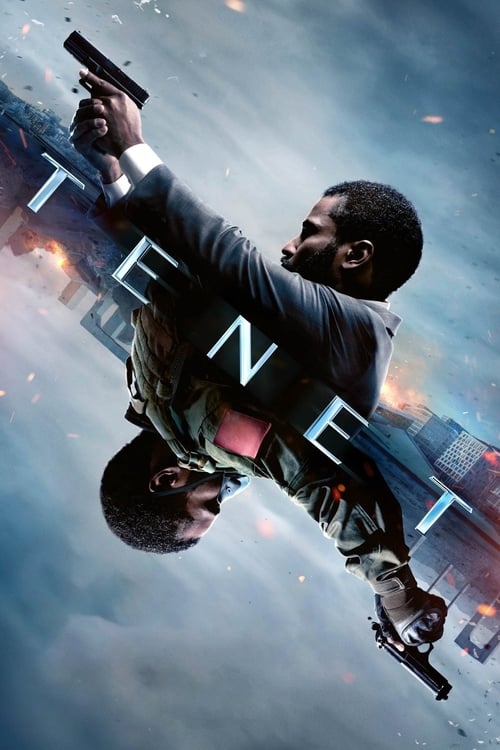
Action · Thriller · Science Fiction
Tenet
American
2020 · Directed by Christopher Nolan · 150 min


Action · Thriller · Science Fiction
American
2020 · Directed by Christopher Nolan · 150 min








Meaning, unpacked
Central idea
Tenet can be read as a film about acting without knowing the full picture: trusting a mission, a faith or a person when cause and effect no longer line up neatly, and about whether choices matter if time is not a straight line.
What it means
Tenet follows a nameless agent, the Protagonist, who is pulled into a secret mission involving people and objects moving backward through time. But the film is really about acting without the full picture. Cause and effect no longer line up, and again and again he has to trust a mission, a faith, or a person without proof. The film treats that trust as a practical necessity for anyone working in secrecy.
It also asks a bigger question: if time is not a straight line, do your choices matter? Its answer is yes. Action counts even when the outcome seems already fixed. Around that sit other ideas: the present may harm those who come after, and each generation leaves its problems to the next. The plot borrows the shape of mutually assured destruction, the Cold War logic of people who can end the world. And on a human scale, the villain's hold over his wife shows control in its smallest form, which is where much of the emotion lives.
Why it mattered
Tenet turned the manipulation of time into the engine of its action scenes, not only of its structure. In the Oslo freeport fight, two directions of time share one space, and choreography, editing and sound all have to work together to make an impossible logic readable. In the final battle, a team splits into two time directions to attack a single objective, so plan and execution become one thing.
It was also made with a stubborn physical streak. Nolan prefers to work in camera, so his team bought a real Boeing 747 and crashed it into a hangar, which he has said was cheaper than a convincing model or computer version. Actors learned movements backward so scenes could be filmed and played in reverse, giving the impossible some weight. Hoyte van Hoytema shot on large film formats, and Nolan has said he conceived it as his own globe-trotting, Bond-style spy story.
Before anyone tells you what to think: what did you make of it?
Log in to rate it and leave commentsIt takes one click with Google or an email link. You come straight back here.
Rate it, keep your notes, and find the next film.
Free, no ads. Your journal, your lists, a Cine Guide that remembers you.
Create your free spaceReviews were divided. Critics praised the ambition, the set pieces and Ludwig Göransson's score, while many found the plot overcomplicated. It opened in some territories in August 2020, as cinemas reopened, so it became a test case for whether big-screen releases could survive the pandemic. Its box office was modest next to Nolan's earlier work, though it did better overseas. It won an Academy Award for Best Visual Effects and was also nominated for Best Production Design.
Its influence is on the blockbuster as a formal puzzle, and its practical staging of reverse action became a reference point in talk of effects work. Today its reputation has grown among people who enjoy puzzle films and rewatching, and it is often called one of Nolan's most formally daring works. For others it remains his coldest and most confusing film. That argument keeps it alive.
What happens
The team stops the algorithm, Kat kills Sator, and Neil sacrifices himself. The Protagonist realises he built the Tenet organisation, so the mission that recruited him was his own design all along.
The last image
The Protagonist parts from Kat, then goes on alone, still protecting a world that will never know what he did.
What it says
The ending answers the film's question about free will: events may be fixed, but acting still matters. The Protagonist trusts a mission he cannot fully see, and the film asks you to accept that this faith is what makes the choice meaningful.
Or follow an idea from this film

Continue the director
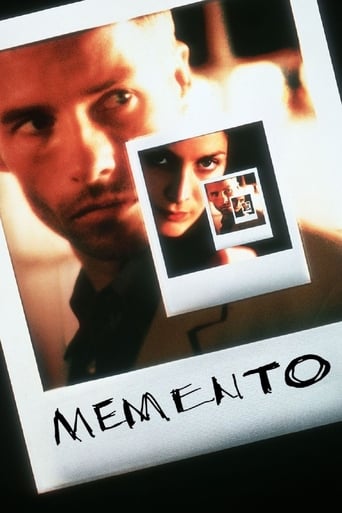
Memento (2000)
Nolan's breakout, where reversed chronology is the entire structure. It shows his time obsession in a smaller, more intimate form.
Compare another approach
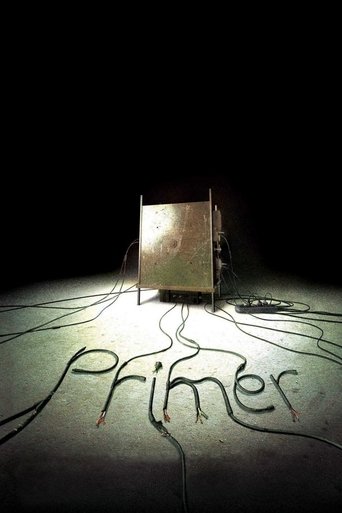
Primer (2004)
A tiny-budget time-travel film that is even more intricate than Tenet, showing how much complexity comes from a simple premise.
Follow the idea
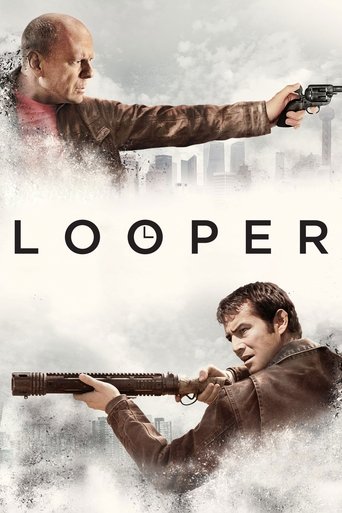
Looper (2012)
Another thriller about causality and the meeting of past and future selves, with a more human-scale story.
See what influenced it
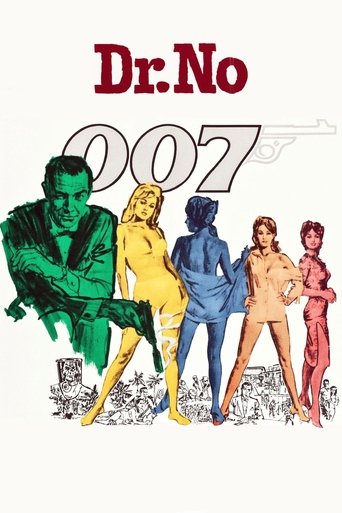
Dr. No (1962)
The first Bond film, whose confident spy-adventure style Tenet echoes and reinvents.

Explore the era or movement
Interstellar (2014)
Another Nolan film where time bends as a physical and emotional force, on a larger and more sentimental scale.