Music
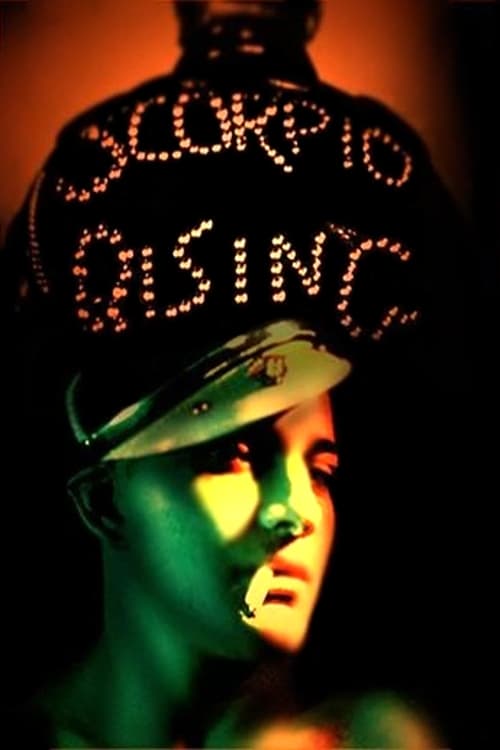
Scorpio Rising
American
1964 · Directed by Kenneth Anger · 28 min


Music
American
1964 · Directed by Kenneth Anger · 28 min



Meaning, unpacked
Central idea
The film can be read as an examination of masculinity as costume and cult: it shows how motorcycles, leather, movie icons and pop songs become a kind of religion of self-image, simultaneously seductive and menacing.
What it means
Scorpio Rising barely has a story. A biker called Scorpio readies his machine and dresses, then comes a party, a race and a crash. The thinness is deliberate: Kenneth Anger's film is about how it looks and sounds, not what happens next.
Its central idea is that masculinity is both a costume and a cult. Motorcycles, leather, movie icons and pop songs add up to a religion of self-image, seductive and menacing at once. Anger cuts James Dean and Marlon Brando in beside religious scenes, as if idols, rebels and saviours share one root. Chrome and skin get the same tender, erotic attention. The ending brings violence and death, with swastikas and occult symbols, which the film neither endorses nor condemns. It is no simple celebration of biker life; glamour and irony sit side by side.
Why it mattered
With no dialogue, Anger built the film on hit records, Bobby Vinton's Blue Velvet among them, and arranged them almost like chapters. The lyrics become a running commentary, sometimes literal, sometimes bitterly ironic, so that innocent romantic songs take on a darker, mocking or erotic edge. The cuts follow the music, joining images from different sources by rhythm, colour or gesture rather than story logic.
It was also bold in what it showed. The camera is openly erotic about male bodies and equipment, making plain what mainstream biker films hinted at or avoided. Borrowed movie and religious clips are folded in, an early case of collage used as argument. The glossy reds, blues and chrome give it a comic-book, advertising look close to pop art. Reaction was split: underground film advocates in New York praised its daring, while officials and many audiences found it obscene.
Before anyone tells you what to think: what did you make of it?
Log in to rate it and leave commentsIt takes one click with Google or an email link. You come straight back here.
Rate it, keep your notes, and find the next film.
Free, no ads. Your journal, your lists, a Cine Guide that remembers you.
Create your free spaceIts sexual imagery brought seizures and prosecutions tied to public screenings, which made it a cause for supporters of experimental film and raised its notoriety as much as its audience. Its tangle of music rights later made distribution and home release a serious problem. Its mix of pop songs and cut images anticipated music video and shaped directors such as Martin Scorsese and David Lynch. Its leather and motorcycle imagery is often linked to gay leather culture, and it reached audiences far beyond that scene.
Today it is seen as Anger's central achievement and a core text of queer and experimental cinema. Once judged as scandal, it is now studied for its editing, its use of pop music and its complicated attitude to masculine myth. Writers still cite it when they argue over whether shock imagery critiques what it shows or merely indulges it. So ask yourself: were you looking at the bikers, or looking with them? The film wants you to feel how easily that blurs.
What happens
The bikers ride to a race, and one rider dies in a crash. Anger cuts the accident against flashing police lights and images of authority and worship. The cult of speed and style, built up all film long, ends in death.
The last image
A blunt, ambiguous image of death, suggesting the pose carries on in a continuing cycle.
Two readings
What it says
The death ends the film because glamour, worship and danger were tied together from the start. Anger leaves the cycle open, so you must decide whether you were watching the bikers or looking with them.
Or follow an idea from this film


Explore the era or movement
Meshes of the Afternoon (1943)
Maya Deren's dreamlike short is the foundation of the American avant-garde that Anger belongs to, and shows a quieter, more personal approach.
See its influence
Mean Streets (1973)
Scorsese's early film shows how pop songs and male ritual from Anger's world moved into narrative cinema.

Follow the idea
Easy Rider (1969)
A biker film built on rock music and countercultural myth, which makes a useful comparison with Anger's more critical, erotic treatment.
See what influenced it
Un Chien Andalou (1929)
The surrealist short that pioneered shocking image collisions and anti-narrative cinema, which Anger inherits and updates.

Jump forward
Blue Velvet (1986)
Lynch shares Anger's fascination with the dark side of American pop innocence, including the same song.