Drama
Scarecrow
American
1973 · Directed by Jerry Schatzberg · 112 min


Drama
American
1973 · Directed by Jerry Schatzberg · 112 min







Meaning, unpacked
Central idea
Scarecrow explores how two isolated men build a fragile family out of a shared fantasy, and what it costs one to carry the other. It can be read as a film about the limits of male toughness and the need for care.
What it means
Scarecrow is about two isolated men who build a fragile family out of a shared fantasy. Max is a hard-edged ex-con, Lion a sailor with a joke for every occasion. They head east together with a car wash as their dream, and a child Lion has never met waiting at the end of the line. The film asks what it costs one of them to carry the other, and you can read it as a film about the limits of male toughness and how badly such men need care.
The title comes from the scarecrow story: a scarecrow does not win by frightening the crows, but by making them laugh. Humour is protection, and it comes at a price. Lion's clowning keeps violence away, and feeling too. Max's bluster and aggression hide hurt. The two defences are mirror images, and the film watches them wear down. Then the phone call to Detroit undoes Lion, the one who looked after the other now needs looking after, and the car wash becomes a place to belong. The joke can keep the crows away for a while. In the end, what holds a person up is someone willing to stay.
Why it mattered
Scarecrow won the Palme d'Or at Cannes in 1973, shared with The Hireling, and drew strong praise for its two leads. It belongs to the New Hollywood road film, but it trades the rebellion of Easy Rider for a quieter question: what do two marginal men owe each other? It favours drifters, unresolved feelings and open roads over plot, and its prison farms, bus stations and cheap bars show a country of people who drift through the system without being supported by it.
Before anyone tells you what to think: what did you make of it?
Log in to rate it and leave commentsIt takes one click with Google or an email link. You come straight back here.
Rate it, keep your notes, and find the next film.
Free, no ads. Your journal, your lists, a Cine Guide that remembers you.
Create your free spaceIts style was part of the era's realism. Vilmos Zsigmond, a Hungarian émigré who shot several key New Hollywood films, gave it a pale, widescreen look, with cold, hazy natural light that leaves the men small against roads, fields and rail yards. Jerry Schatzberg began as a fashion and portrait photographer, so his frames are composed, yet he lets scenes run long and keep their rough edges. In the United States, critics were divided about the slow, melancholic mood, and it was not a major hit.
Scarecrow helped establish the tragicomic buddy film, in which two mismatched drifters carry real emotional weight. You can see that pattern in later road films such as Rain Man and Paris, Texas. Its restraint, with a sparing score and much reliance on ambient sound and silence, now looks ahead of its time.
Its reputation has grown steadily. Many now count it among the most affecting American films of the 1970s, valued for the Hackman and Pacino pairing, Zsigmond's photography and that restraint. It still receives no Academy Award nominations to its name and remains less famous than its stars' best-known work. It turns up mainly in retrospectives and in talk about 1970s American cinema, prized as a portrait of drifters and working-class lives on the road.
What happens
After the call to Detroit, Lion collapses into a silence he can't leave, and Max takes him to a hospital. Max gives up his own plans and puts the car wash money toward staying by Lion's side.
The last image
Lion lies unresponsive in his hospital bed while Max stays beside him.
What it says
The two men's defences, Lion's jokes and Max's bluster, finally give way, and what's left is care. The car wash stops being a business plan and becomes a reason to stay with the one person who matters.
Or follow an idea from this film
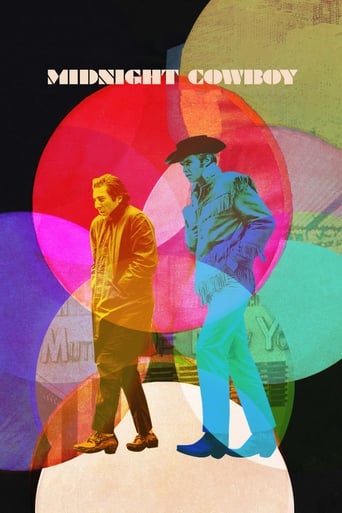

Compare another approach
Midnight Cowboy (1969)
Another New Hollywood study of two outsiders whose friendship becomes the film's emotional centre, with a similar mix of humour and pain.
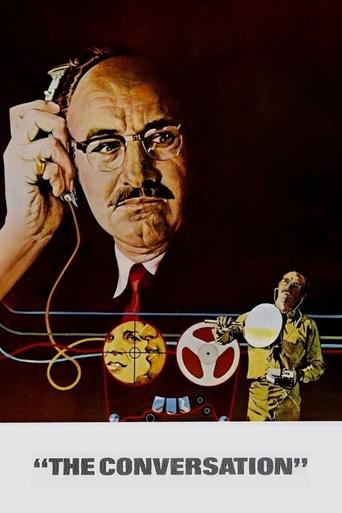
Explore the era or movement
The Conversation (1974)
A parallel Gene Hackman performance in a very different register, showing how New Hollywood used him for inward, damaged characters.

See what influenced it
Easy Rider (1969)
The film that popularised the American road movie. Seen beside Scarecrow, it shows how a rebellious genre became a quieter form.

Explore the era or movement
Badlands (1973)
Released the same year, it shows another side of 1970s American cinema: wide landscapes, drifting protagonists and a calm, observational style.

Follow the idea
Paris, Texas (1984)
A later road film about a damaged man trying to reconnect with family, making the link between drifting and belonging clearer.