Drama
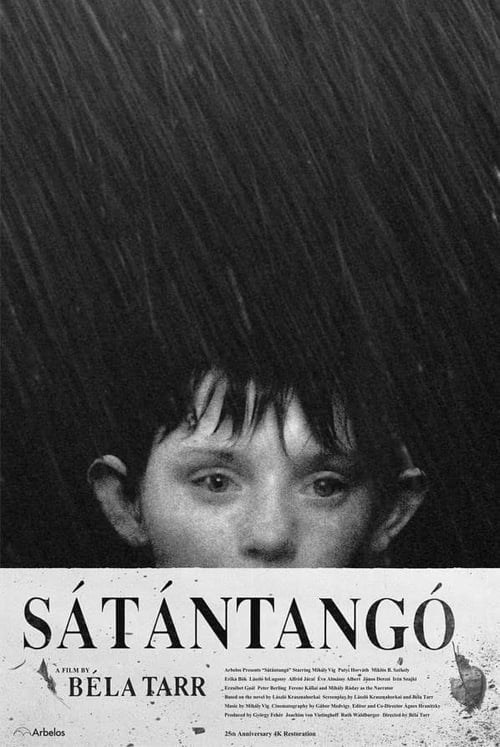
Satantango
Hungarian
1994 · Directed by Béla Tarr · 432 min


Drama
Hungarian
1994 · Directed by Béla Tarr · 432 min






Meaning, unpacked
Central idea
The film can be read as a study of how people in despair surrender to anyone who offers a story. It examines hope, deception and self-deception inside a closed, decaying world where waiting has replaced action.
What it means
You have just spent seven and a quarter hours in a village where the rain never stops. At its heart, Satantango studies how people in despair surrender to anyone who offers them a story. The villagers want to believe, and that wanting is what gets used. Nobody here is simply a victim.
Irimiás's address shows persuasion as a craft: his rhetoric turns their desires against them, and authority becomes a performance as well as a form of surveillance. Estike and the cat is staged without comfort or explanation. It shows how cruelty travels downward until a child absorbs the community's failures, and it gives the political fable its human cost. Many read the film as a portrait of Eastern Europe after 1989, a failed system with nothing to replace it. Its twelve chapters echo the tango's six steps forward and six back, so the film folds back on itself, and the doctor's closing vigil closes the circle and asks who watches, and who acts.
Why it mattered
Béla Tarr pushed the long-take tradition of Jancsó and Tarkovsky to a scale no feature had attempted. Shots run for minutes, and the camera tracks, drifts and circles at a deliberate distance. Editor Ágnes Hranitzky uses so few cuts that each one lands like an event. Time itself becomes the subject, and it changes how you see walking, waiting, weather and faces.
The length was a creative choice. Tarr wanted you to live in the village's time, and a shorter film would have defeated the point. The opening shot of cows leaving their barn teaches patience as a way of seeing. With Hungary's film system in crisis after 1989, a German, Swiss and Hungarian co-production made such an uncommercial project possible.
Before anyone tells you what to think: what did you make of it?
Log in to rate it and leave commentsIt takes one click with Google or an email link. You come straight back here.
Rate it, keep your notes, and find the next film.
Free, no ads. Your journal, your lists, a Cine Guide that remembers you.
Create your free spaceThe film established Tarr as a major figure and set a benchmark for filmmakers working with duration, including those in the slow-cinema movement. Its mix of rigorous long takes and bleak moral allegory shaped later work, including Tarr's own Werckmeister Harmonies and The Turin Horse.
It premiered at the Berlin festival in 1994 and became an art-house event. Some critics admired its ambition and rigour; others found it forbidding. For years it travelled through festivals and limited screenings. Its reputation has grown steadily, helped by restorations, home media and repertory screenings. Today it is a central work of 1990s European cinema and the key reference point for slow cinema. It is often shown as a full-day event with intermissions, and finishing it is a kind of rite of passage.
What happens
Irimiás talks the villagers into handing over their money and leaving for a promised new farm. But he is a police informant, and they are scattered to separate places. He reports to the authorities, and the doctor boards up his windows.
The last image
The doctor nails boards across his windows as the bells ring, shutting himself in, and the film closes where it began.
What it says
The ending shows how easily hope in despair is turned into obedience, and how the villagers' own wanting is used against them. The film ends where it began because nothing has changed, and the doctor, who watched it all, only hides.
Or follow an idea from this film
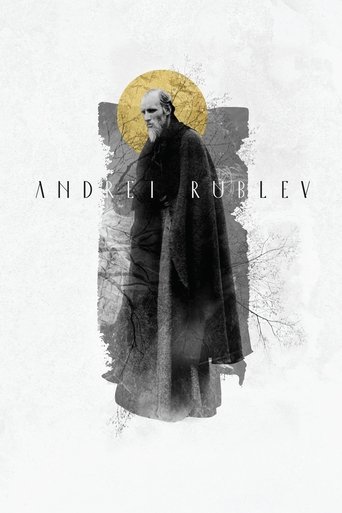

See what influenced it
Andrei Rublev (1966)
Tarkovsky's epic of faith and violence shows the earlier tradition of long takes and weather as spiritual pressure, which Tarr builds on.
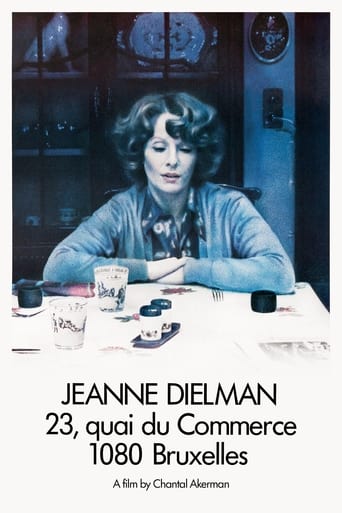
Compare another approach
Jeanne Dielman, 23, quai du Commerce, 1080 Bruxelles (1975)
Another film that uses duration and repetition to make everyday time visible, though its mode is domestic and strict rather than rural and dark.
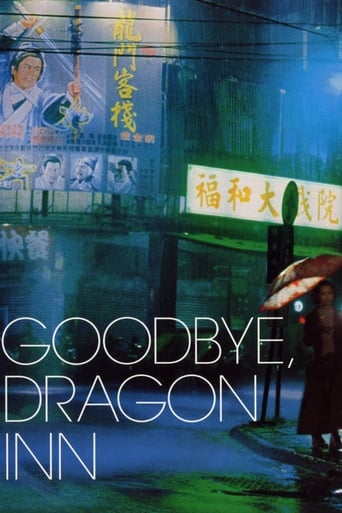
Follow the idea
Goodbye, Dragon Inn (2003)
Tsai Ming-liang's quiet, long-take study of a closing cinema shows how slow cinema can feel melancholy, funny and beautifully precise.
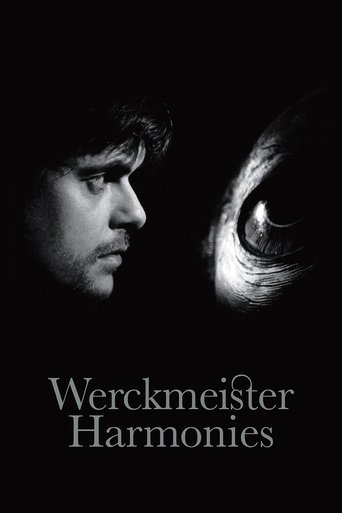
Continue the director
Werckmeister Harmonies (2000)
Tarr's next feature offers his style in a far shorter, more concentrated form, and is an easier second step into his work.
Compare another approach
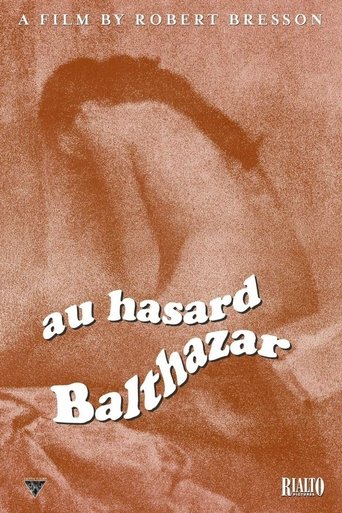
Au Hasard Balthazar (1966)
Bresson's austere story of a donkey passing among cruel people shares Tarr's unsentimental view of innocence, cruelty and a closed community.