Drama
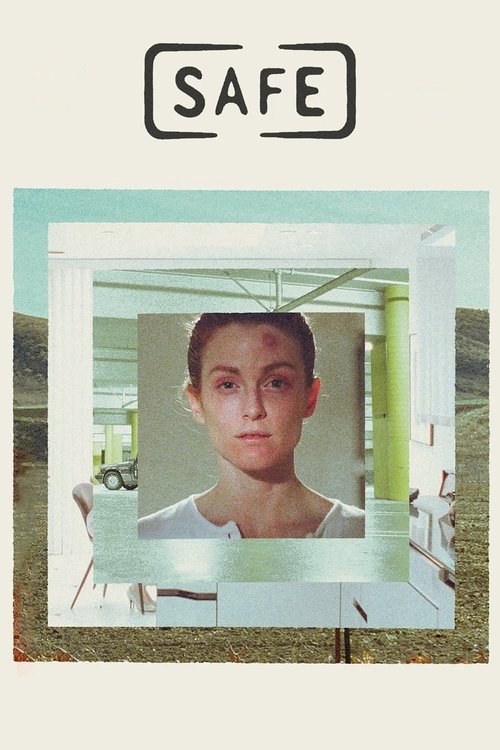
Safe
American
1995 · Directed by Todd Haynes · 119 min


Drama
American
1995 · Directed by Todd Haynes · 119 min







Meaning, unpacked
Central idea
The film can be read as a study of a person with little sense of self, in a world of products, routines and slogans that offer protection from everything except emptiness. Whether Carol is sick from her environment, her mind, or her life is left deliberately open.
What it means
Carol's body turns against the world around her. Doctors find no cause, so she goes to Wrenwood, a healing retreat, and there she withdraws into ever smaller, safer space.
Here is one way to read it. Carol has very little sense of self, and she lives among products, routines and slogans that promise protection from everything except emptiness. Is she sick from her environment, her mind, or her life? The film leaves that open on purpose. At Wrenwood, Peter Dunning's talk speaks the language of kindness, but slowly it sounds like blame, as if illness were a personal failing fixed by self-love.
Why it mattered
Haynes made Safe in a spirit of strict control. Long takes and wide, symmetrical frames leave Carol small in the picture, boxed in by doors and furniture, so the room itself seems to act on her. The pastel interiors and bleached Wrenwood look safe and feel suffocating, while a bed of hums and appliance noise makes the world itself sound like a threat.
The film borrows dread from horror and a domestic setting from melodrama, then denies both their usual payoffs. That refusal to explain is a formal choice. It was Haynes's second feature, a move from stylised experiment to something that looked realist but was just as rigorous.
Before anyone tells you what to think: what did you make of it?
Log in to rate it and leave commentsIt takes one click with Google or an email link. You come straight back here.
Rate it, keep your notes, and find the next film.
Free, no ads. Your journal, your lists, a Cine Guide that remembers you.
Create your free spaceSafe premiered in 1995 to a small but intense audience. Many critics called it bold and original, while others found its distance frustrating. It earned little at the box office and was for years better known to critics and filmmakers than to the public.
Its reputation has grown steadily. It is now seen as one of the central American films of the 1990s, and it is often revisited for what it says about wellness culture and health anxiety. Many read it as a parable of the AIDS crisis, and during the COVID-19 pandemic, Carol's fear of contamination and isolation at home felt newly familiar. Its influence runs through Haynes's later work, including Far from Heaven and Carol.
What happens
Carol ends up in a small, sealed, porcelain-lined hut at Wrenwood, her face marked with lesions. She looks into a mirror and tells herself she loves herself. Her illness is never explained, and it is unclear whether she is better or worse.
The last image
Carol faces her own reflection in the mirror and says that she loves herself.
Three readings
What it says
The ending gathers the film's ideas: self-love offered as a cure, isolation mistaken for safety, and a woman still hard to read. It stays open on purpose, because Safe refuses to say what made Carol ill.
Or follow an idea from this film
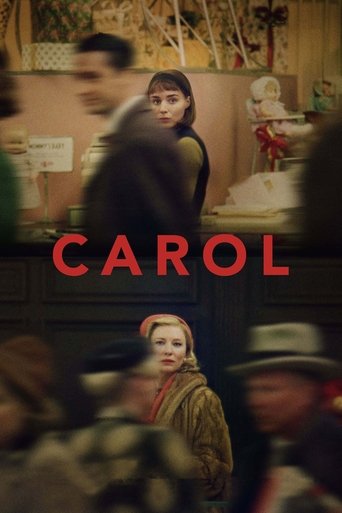

Continue the director
Carol (2015)
Haynes's most acclaimed later film shows how his restraint and period precision developed, moving from dread to longing.
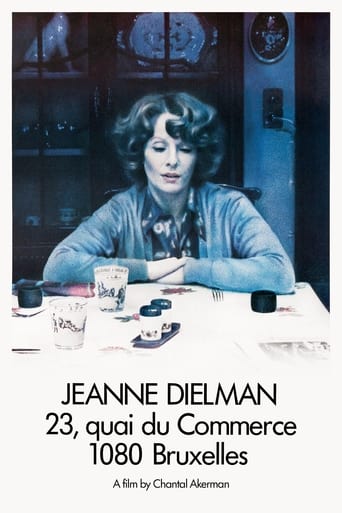
Compare another approach
Jeanne Dielman, 23, quai du Commerce, 1080 Bruxelles (1975)
Akerman's film is the purest example of the observational domestic style that Safe adapts, and is a useful, more austere comparison.

Follow the idea
Blue Velvet (1986)
Lynch also looks at the polished surface of American suburbia, with menace underneath, but through nightmare and eccentricity rather than cool realism.
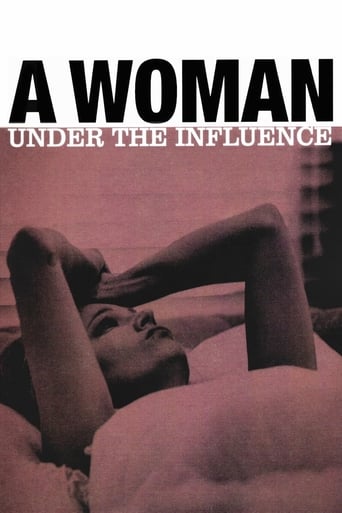
Follow the idea
A Woman Under the Influence (1974)
Cassavetes shows another woman whose behaviour is judged by family and medicine, in a very different, raw and emotional style.

See what influenced it
L'Avventura (1960)
Antonioni's alienated modern heroine and exacting framing are a key source for Safe's visual approach.