Drama · History
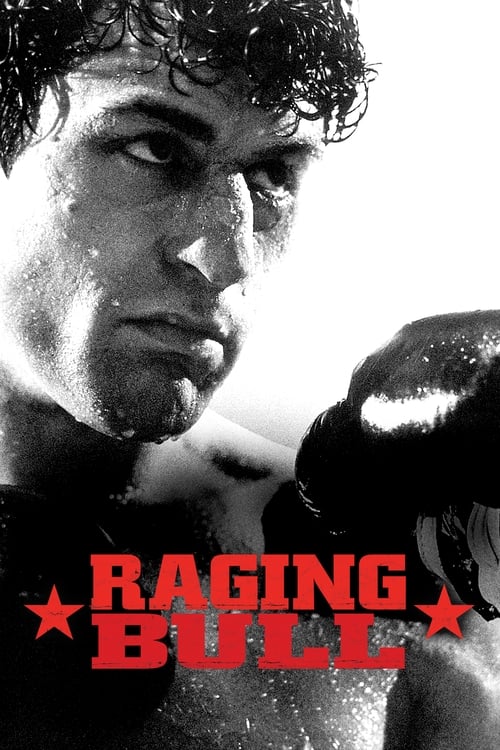
Raging Bull
American
1980 · Directed by Martin Scorsese · 129 min


Drama · History
American
1980 · Directed by Martin Scorsese · 129 min







Meaning, unpacked
Central idea
The film can be read as a study of a man who knows only violence as a way to express feeling, and whose jealousy and self-loathing damage everything near him. The ring is the one place where that violence has a purpose.
What it means
Raging Bull follows Jake LaMotta as he fights his way up, then wrecks his marriage and his bond with his brother Joey, ending as a bloated, older man with the ring taken away. The film can be read as a study of someone who knows only violence as a way to express feeling. In the ring, that violence has a purpose. Everywhere else, it just spills over.
Jake takes punishment as readily as he gives it, and the film suggests both come from the same unresolved guilt. That is why the cell breakdown lands so hard: with no opponent left, he turns his fists on himself and the walls. The steak argument works the same way, escalating from nothing because his suspicion about his wife and brother is groundless and yet limitless. Behind it is a culture that rewards toughness but gives men no words for vulnerability. The religious imagery hints at a search for forgiveness, and the film leaves open whether Jake earns it.
Why it mattered
The craft is where all this becomes felt rather than explained. Each fight with Sugar Ray Robinson is staged differently, with the camera, the speed and the sound all changing, so you live it from inside Jake's head. Thelma Schoonmaker cuts them by rhythm and impulse, bending time rather than following how a real bout flows. Punches, flashbulbs, animal-like noises and sudden silences are layered together, while the home scenes feel stiller and more claustrophobic.
It also arrived as a defining late work of the New Hollywood generation, as that era closed, and it pushed the American auteur tradition toward flawed, unlikeable heroes. Rather than a triumphant underdog story, it treats boxing as an extension of one man's temperament. It changed what a sports drama could attempt in tone and form.
Before anyone tells you what to think: what did you make of it?
Log in to rate it and leave commentsIt takes one click with Google or an email link. You come straight back here.
Rate it, keep your notes, and find the next film.
Free, no ads. Your journal, your lists, a Cine Guide that remembers you.
Create your free spaceReviews at the time were divided. Some critics were shocked by the brutality and the unlikeable hero, while others saw an extraordinary achievement in style and performance. It did only modest business, and it lost Best Picture and Best Director to Ordinary People, though it won Best Actor for De Niro and Best Film Editing for Schoonmaker, who has cut Scorsese's films ever since.
Its reputation grew steadily, and it is now widely seen as one of the best American films of its decade. De Niro's body transformation became shorthand for commitment in screen acting. The slow-motion opening and its music are echoed whenever boxing or tragedy is evoked. Later sports dramas prize psychology over triumph, and its mix of operatic style and flawed protagonists runs on into GoodFellas, a good place to go next.
What happens
Years after the title and the jail cell, Jake and Joey meet again and share an uneasy embrace. Jake then rehearses his stage act in a dressing room, shadowboxing at the mirror, still trying to make peace with himself.
The last image
Jake, alone in the dressing room, shadowboxes in front of the mirror as the screen fills with the biblical words about passing from blindness to sight.
Two readings
What it says
The ending refuses to hand Jake a triumph or a punishment. Without the ring, he can only try to find words for what he feels. The film shows the search, not the arrival, because forgiveness is never promised.
Or follow an idea from this film
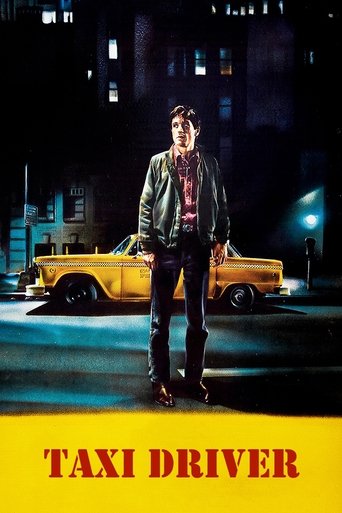

Continue the director
Taxi Driver (1976)
Scorsese and De Niro's earlier collaboration also centres on a volatile, isolated man, with a more nocturnal, hallucinatory style.

See what influenced it
On the Waterfront (1954)
A classic of method-influenced performance about a former boxer, useful for seeing the acting tradition and moral world that Raging Bull builds on.
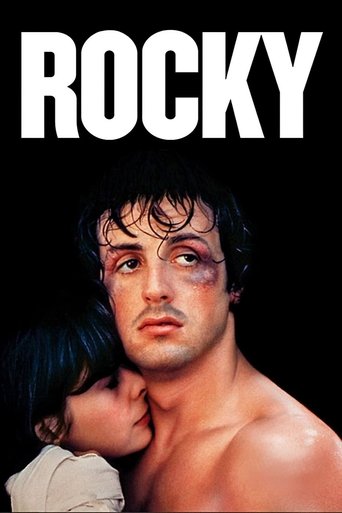
Compare another approach
Rocky (1976)
The crowd-pleasing underdog counterpart to Scorsese's bleak vision. Watching both shows how differently the same sport can be used.

Jump forward
GoodFellas (1990)
Scorsese's later gangster epic shows how the techniques of Raging Bull, such as fluid camera, dense soundtrack and Schoonmaker's editing, develop into a different kind of story.
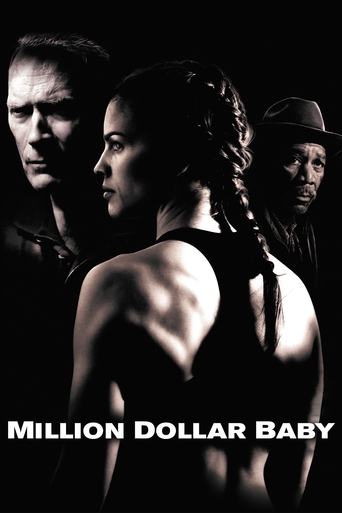
Follow the idea
Million Dollar Baby (2004)
A quieter, more classical boxing drama that explores sacrifice and tragedy, offering a useful contrast in tone and style.