Comedy · Thriller · Drama
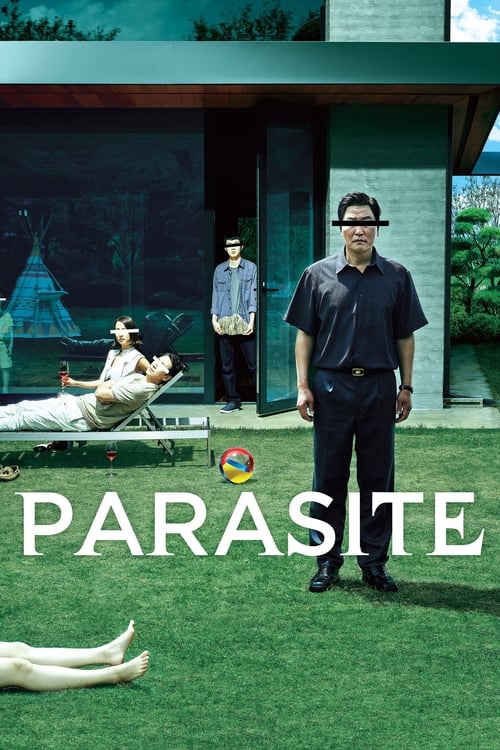
Parasite
South Korean (기생충)
2019 · Directed by Bong Joon Ho · 133 min


Comedy · Thriller · Drama
South Korean (기생충)
2019 · Directed by Bong Joon Ho · 133 min
Meaning, unpacked
Central idea
The film can be read as an examination of how class division is built into space and perception, and of how people with little power end up competing with each other instead of with the system above them.
What it means
Parasite is about class division built into space and perception. A poor family talks its way into the service of a rich one, and it ends in violence at a garden party. But the film is really about how inequality feels. Wealth is high, bright and open. Poverty is low, cramped and below street level. Bong Joon Ho turns inequality into geography, so you feel it in your legs every time someone climbs or descends.
The film is also about how people with little power end up fighting each other instead of the system above them. The Parks are never obviously cruel. They are courteous and tasteful, yet their politeness still marks who counts. The Kims get in by performing the roles employers expect, which raises an uncomfortable question: how much of social standing is just a convincing presentation? Then there is smell, a line no disguise can erase. A passing reaction to it carries the film's central insult.
Why it mattered
In 2019 Parasite showed that a subtitled genre film could reach the widest audience. It premiered at Cannes and won the Palme d'Or, the first for a Korean film. At the Academy Awards it won four Oscars, including Best Picture, the first for a film not in English. Bong's remark about overcoming "the one-inch-tall barrier of subtitles" was widely repeated.
It also showed how much a film can say through design. The Park house and the flooded neighbourhood were built sets, so Bong could control sightlines, glass, stairs and the flood itself. Hong Kyung-pyo's widescreen frames layer doors, windows and levels to show who watches and who is watched. The screenplay plants objects and lines early and pays them off with changed meaning, while the genre keeps shifting from comedy into something darker.
Before anyone tells you what to think: what did you make of it?
Log in to rate it and leave commentsIt takes one click with Google or an email link. You come straight back here.
Rate it, keep your notes, and find the next film.
Free, no ads. Your journal, your lists, a Cine Guide that remembers you.
Create your free spaceParasite fed a wave of class-conscious thrillers and satires, and helped open mainstream markets to Korean film and television. Its example encouraged more international co-productions and wider acceptance of non-English work. Its Oscar win is often cited as a turning point for how Hollywood and wider audiences treat films in other languages.
Its reach went beyond cinema. The noodle dish, rendered in the subtitles as "ram-don", sparked home-cooking videos, and Nongshim later marketed a packaged version. The banjiha, the semi-basement flat, became a talking point abroad. After deadly flooding in Seoul in 2022, coverage often recalled the film's flood sequence. Today it is treated as one of the defining films of its decade and a standard teaching example of visual storytelling about class.
What happens
Ki-woo wakes from his head injury, learns his father is hiding in the Parks' bunker, and dreams of buying the house to free him. The film then cuts back to the semi-basement, where that plan is only a dream.
The last image
Ki-woo is back in the cramped semi-basement, and the rich house and his father's rescue are still out of reach.
What it says
The ending refuses a rescue. Ki-woo's plan is sincere, but it belongs to a system built to keep him below street level. The film closes where it began, so you feel how little has changed and how far the climb is.
Or follow an idea from this film


Continue the director
Memories of Murder (2003)
Bong's earlier crime film shows the same blend of dark humour, social critique and tension, in a rural 1980s setting.

Compare another approach
Shoplifters (2018)
Winner of the Palme d'Or the year before, it also follows a poor household surviving by improvisation, but with a gentler, more tender view.
See what influenced it
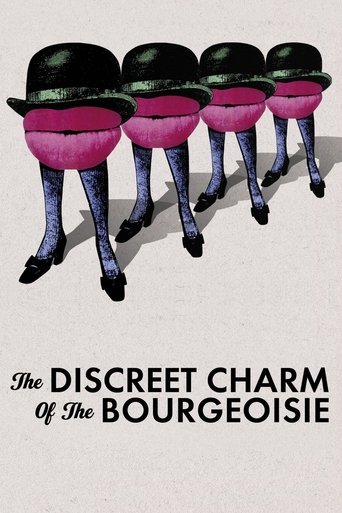
The Discreet Charm of the Bourgeoisie (1972)
A satirical ancestor that treats social ritual and class manners as comedy, useful for seeing what Bong adapts.

See its influence
Triangle of Sadness (2022)
A more openly comic descendant that sets class power in a new situation after Parasite's success.

Explore the era or movement
Burning (2018)
A Korean film from the same period, slow and ambiguous, where class resentment becomes mystery and unease.