Drama · Thriller
Olivier, Olivier
French
1992 · Directed by Agnieszka Holland · 104 min


Drama · Thriller
French
1992 · Directed by Agnieszka Holland · 104 min
Meaning, unpacked
Central idea
The film is fundamentally about the stories grieving people need to believe. It can be read as an enquiry into how love, guilt and longing can shape what a family chooses to see, and what it costs when that structure is tested.
What it means
A boy vanishes from a country farmhouse. Years later a young man appears, and the mother is certain he is her son. The father is not so sure. That is all the plot you need, because the film is really about the stories grieving people need to believe. Agnieszka Holland asks how far desire can bend perception, whether belief can be a way of surviving, and what it costs when that belief is finally tested.
Elisabeth's loss has never been resolved, so her certainty is immediate. Her husband Serge holds back. They are reacting to the same loss; they simply carry the guilt in opposite ways, and the marriage becomes a measure of that difference. Underneath sits a bigger question: does identity rest on blood, on memory, or on the wish of other people? There is a darker thread too, in how a child's vulnerability and an adult's longing can become entangled. Holland never underlines it. She lets it sit there.
Why it mattered
Holland tells this story with restraint, and that is what makes the film stand out. She avoids sensation and lets scenes play without commentary. Nobody makes a speech. Suspicion and need live in glances, hesitations and the way people sit at the table, and you are trusted to feel the doubt for yourself. The opening disappearance works the same way: it is staged quietly, with no explanation, and that missing explanation becomes the film's engine.
It also shows how a family drama can borrow the shape of a mystery. After a time jump, information is held back and arrives late, so when the truth comes it recasts earlier scenes. The ordinary look of the countryside and farmhouse, lit and framed naturally, makes the disturbances feel more real. It is a good example of early 1990s European art cinema, where psychological drama and suspense meet.
Before anyone tells you what to think: what did you make of it?
Log in to rate it and leave commentsIt takes one click with Google or an email link. You come straight back here.
Rate it, keep your notes, and find the next film.
Free, no ads. Your journal, your lists, a Cine Guide that remembers you.
Create your free spaceCritics received it as a disturbing, intelligent psychological drama. They admired its restraint and its performances, though some found the subject uncomfortable. It confirmed Holland's reputation after Europa Europa. It belongs to a line of European films about families disturbed by a hidden truth, and its blend of domestic realism and suspense anticipates later art-house dramas such as Caché and The White Ribbon.
Today it is seen as one of Holland's most accomplished European films, valued for its patient control of tone. It is still less widely seen than Europa Europa, but it is increasingly appreciated as a precise study of grief and belief. It turns up in courses on her work and on 1990s French cinema, and often alongside The Return of Martin Guerre and the documentary The Imposter. What lingers is the thought that the most powerful lie here is not the one told to the family. It is the one the family needed.
What happens
The young man is exposed as an impostor. The real Olivier died on the afternoon he disappeared. The newcomer had learned the family's story and stepped into the place it offered, leaving them facing the loss they had tried to undo.
The last image
The film closes on the family with no son restored, left to face the absence it had spent months covering over.
What it says
The ending strips away the comfort the family chose. The film is about the stories grief needs, so the lie that matters most is the one they wanted to hear. It ends on that loss because nothing else can answer it.
Or follow an idea from this film
Continue the director
Europa Europa (1990)
Holland's breakthrough, another film in which identity is tested under pressure, told with the same controlled realism.
Coming soon


See what influenced it
Forbidden Games (1952)
Another French rural drama where a child's emotional logic collides with the adult world, handled with similar seriousness.
Follow the idea
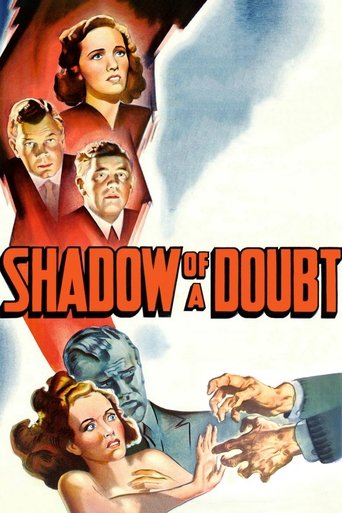
Shadow of a Doubt (1943)
A small-town family disturbed by a figure whose presence reveals hidden tensions, from Hitchcock's more classical suspense.
Jump forward
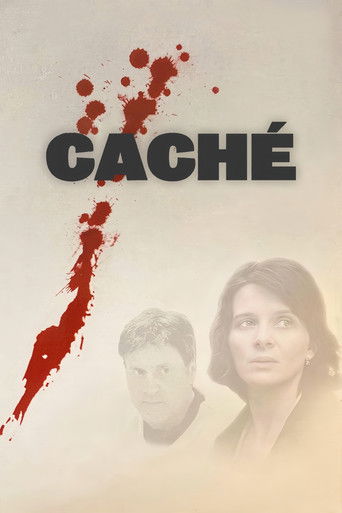
Caché (2005)
A modern European drama in which a family's secrets and guilt come to the surface through quiet, realist means.