Documentary · History
Night and Fog
French (Nuit et Brouillard)
1956 · Directed by Alain Resnais · 32 min


Documentary · History
French (Nuit et Brouillard)
1956 · Directed by Alain Resnais · 32 min
Meaning, unpacked
Central idea
The film is about the difficulty of remembering. It suggests that peaceful ruins, tidy grass and distance in time can become ways of forgetting, and that the horror belongs not to monsters but to a system many people helped to run or ignored.
What it means
Night and Fog is about how hard it is to remember. It opens on a quiet colour landscape, and the camera slowly shows you what that landscape is: a camp. Peaceful ruins, tidy grass and the passing years can become ways of forgetting, because time and nature cover the evidence. The film looks anyway, moving between the green, empty present and the black-and-white past.
It also says the horror did not belong only to monsters. It belonged to a system that many people helped to run, or chose to ignore. The narration asks who built the camps, who supplied them, who guarded them and who looked away, then turns the question toward you. It stays factual, and the cold organisation is more disturbing than any raised voice. The film admits that no description or image can recreate the reality. It makes the attempt anyway, because the alternative is silence.
Why it mattered
In 1956, many people in France and Germany still preferred silence about the camps. This film brought them into mainstream cinema. Resnais mixed colour footage of the empty, overgrown sites, shot by his own crew in the mid-1950s, with black-and-white archive material, and the contrast carries much of the meaning. It also showed that a documentary could think, not just record.
Its methods were new and careful. Long, fluid tracking shots glide through corridors and fields, and their elegance is the point: the beauty of the present cannot be trusted. Jean Cayrol, who survived Mauthausen-Gusen, wrote a measured text, read without theatrical emphasis. Hanns Eisler's spare score often works against the images instead of comforting you. The film handles its hardest footage, the liberation images, with restraint, which is an ethical position on how to film atrocity.
Before anyone tells you what to think: what did you make of it?
Log in to rate it and leave commentsIt takes one click with Google or an email link. You come straight back here.
Rate it, keep your notes, and find the next film.
Free, no ads. Your journal, your lists, a Cine Guide that remembers you.
Create your free spaceNight and Fog became a template for films that approach atrocity through place, memory and the failures of witnessing. You can follow its influence from Resnais's own Hiroshima mon amour to Shoah, Sans Soleil and The Zone of Interest. Claude Lanzmann's rejection of archival images in Shoah was partly a reply to it. It was soon used in schools and screenings across Europe, and won the Prix Jean Vigo in 1956.
Today it remains the standard short introduction to Holocaust cinema, often taught in both film and history courses. It is not beyond criticism: it is often faulted for barely foregrounding that most of the victims were Jewish, which makes it a case study in how postwar Europe framed the genocide. Its closing question about who stays vigilant is still quoted in discussions of remembrance, and its final lesson holds: remembering is never finished, and each new viewer has to do it again.
What happens
The film returns to the quiet, ruined camp of the present. The narrator says the guilty claimed they only followed orders, then asks who is responsible and who stays vigilant when the same signs come back.
The last image
The camera passes over the silent ruins one last time, while the narration warns you not to believe this has gone for good.
What it says
The ending refuses to let the past stay in the past. By turning the question on you, the film makes remembering your task, because forgetting is how such things return.
Or follow an idea from this film

Continue the director
Hiroshima Mon Amour (1959)
Resnais's first feature carries the same concern with memory and catastrophe into fiction, and shows how his documentary methods became a new narrative form.
Follow the idea
Shoah (1985)
Lanzmann's nine-hour documentary takes the question of how to represent the camps in the opposite direction, using only testimony and present-day locations.
Compare another approach
Triumph of the Will (1935)
Leni Riefenstahl's Nazi propaganda film shows the regime's own image-making. Seen beside Resnais, it shows how the same medium can glorify or indict.
Jump forward
The Zone of Interest (2023)
A modern fiction about life beside Auschwitz, it echoes Resnais's idea that the horror lies in the ordinary and the overlooked.
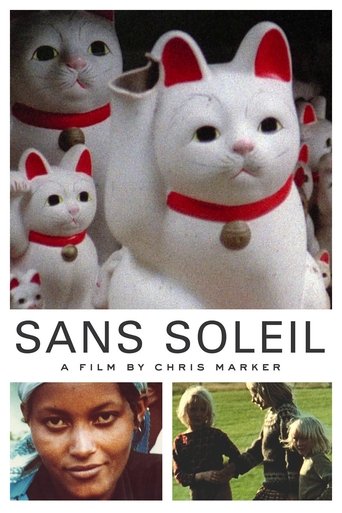
See its influence
Sans Soleil (1983)
Chris Marker's travelling essay on memory continues the tradition of poetic narration over images that Night and Fog helped establish.