Action · Thriller · Science Fiction
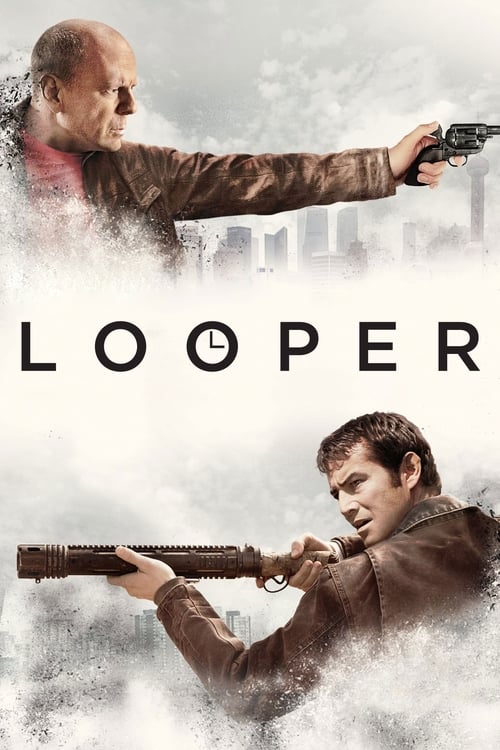
Looper
American
2012 · Directed by Rian Johnson · 118 min


Action · Thriller · Science Fiction
American
2012 · Directed by Rian Johnson · 118 min











Meaning, unpacked
Central idea
The film can be read as a story about how a person's choices reach forward and backward, and how violence tends to produce the very future it tries to prevent. Its central question is who is entitled to decide another life's worth.
What it means
Looper is a science fiction thriller that keeps telling you it isn't really about science. A young killer meets his older self, hesitates, and the chase that follows ends at a farm. Underneath is a question: who gets to decide what another life is worth? The film suggests that violence tends to produce the very future it is trying to prevent, and that both Joes act to protect what they want. It asks what happens when a selfish man is offered the chance to give something up.
That's why the diner scene matters. Two versions of Joe sit across a table, and Willis's older Joe waves away any need to explain time travel; it would mean sketching diagrams with straws, he says. The story is about people, not mechanics: one life, argued over by its own beginning and end. Around Sara and her son, the film slows down and the question gets a human cost. The ending settles the argument with one action, not a speech: only breaking the pattern changes anything.
Why it mattered
Looper took the time-loop story and gave it a hard-boiled noir treatment, in the line of The Terminator and Twelve Monkeys. It was an original screenplay by Rian Johnson, not an adaptation, and it let him bring the genre play of his small-scale noir debut, Brick, to a larger canvas. He deliberately kept the time-travel rules loose and let the story rest on character choices, so the big decisions belong to people rather than to paradox diagrams.
Before anyone tells you what to think: what did you make of it?
Log in to rate it and leave commentsIt takes one click with Google or an email link. You come straight back here.
Rate it, keep your notes, and find the next film.
Free, no ads. Your journal, your lists, a Cine Guide that remembers you.
Create your free spaceIt also showed what a studio-sized thriller could do with a light touch. A voiceover and a long montage squeeze years of a numb life into minutes, then the film slows for an intimate second half, moving from neon city nights to open cane fields. Gordon-Levitt's prosthetic nose and brow, plus his study of Willis's voice and gestures, aimed at suggestion rather than imitation, and the effect works because it's partial.
Looper opened the Toronto International Film Festival in 2012, a high-profile slot for a genre film. Critics praised its ambition, its noir mood and the performances of Gordon-Levitt, Willis and Emily Blunt, and it did well commercially against a modest budget. Some viewers argued about its time-travel logic, but most reviews treated that as secondary to the character drama. Its success helped put Johnson on the path to directing Star Wars: The Last Jedi.
Today it's seen as one of the stronger original science fiction films of the 2010s, and it's often cited in talk of smart mid-budget genre films. It's a reference point for later time-loop thrillers that favour character stakes over paradox diagrams. The diner line about straws is still quoted by fans as a joke about over-analysing time-travel plots, and its closed loop turns up in philosophy and science-communication pieces about paradoxes and free will.
What happens
Joe realizes Old Joe will kill Cid or his mother, and that this loss is what turns the boy into the Rainmaker. So he shoots himself. Old Joe vanishes, and Cid keeps his mother and his chance at a different life.
The last image
Cid sits in the cane field with his mother, calm, as the threat that would have made him the Rainmaker is gone.
What it says
The film argues you can't win an argument with your own future; you can only break the pattern. Joe's death is the first time he gives something up for someone else, and the cycle of violence ends because he stops feeding it.
Or follow an idea from this film
Continue the director
Brick (2005)
Johnson's debut shows where the noir voice in Looper came from. It is a stylised detective story set in a high school.
Coming soon

See what influenced it
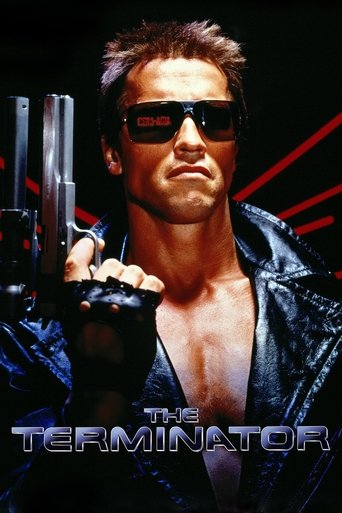
The Terminator (1984)
The clearest ancestor of the assassin-through-time premise, with a similarly lean, propulsive style.
Compare another approach
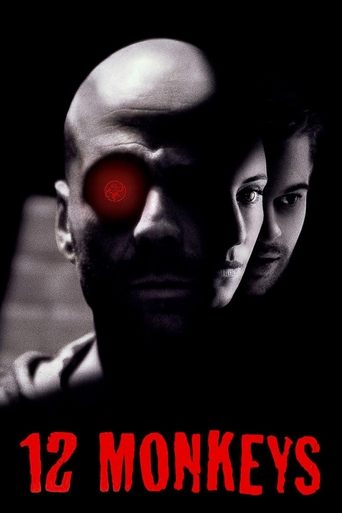
Twelve Monkeys (1995)
Compare how a darker, more fatalistic film handles time travel, memory and the question of whether the past can be altered.
Follow the idea
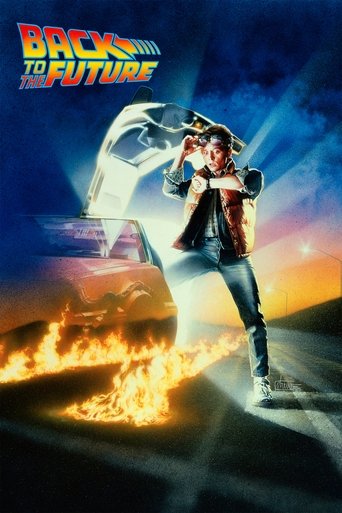
Back to the Future (1985)
A much lighter treatment of changing the past, useful for seeing how differently the same premise can be played.
Jump forward
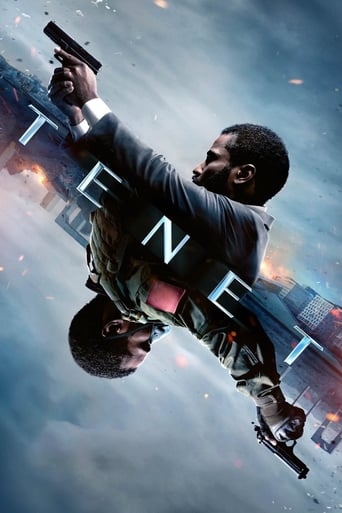
Tenet (2020)
A later, more mechanically complex take on time manipulation that makes a revealing contrast with Looper's character-first approach.