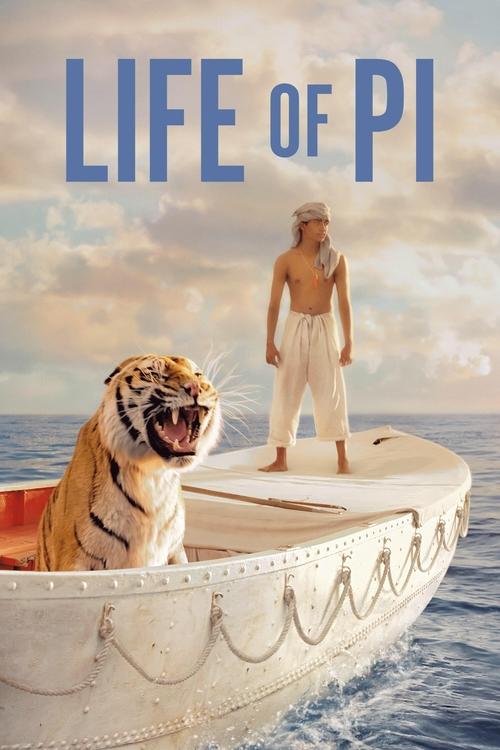
Adventure · Drama
Life of Pi
American
2012 · Directed by Ang Lee · 127 min


Adventure · Drama
American
2012 · Directed by Ang Lee · 127 min








Meaning, unpacked
Central idea
The film is about how people make sense of suffering and why they choose to believe in something. It can be read as an argument that faith, like storytelling, is a way of surviving and of finding meaning in what has happened.
What it means
Life of Pi is about how people make sense of suffering, and why they choose to believe in something. A boy, a tiger, a lifeboat, and a story that comes with a choice at the end. The film can be read as an argument that faith, like storytelling, is a way of surviving, a way of finding meaning in what has happened. That is why Pi's openness to Hinduism, Christianity and Islam is more than a quirk. It sets up a hard question: how does belief work when proof is unavailable?
The boat tests that idea. Can fear, respect and dependence live side by side? Pi's rules about the tiger may be about survival, or about himself. The sea shifts between wonder and indifference, and the film refuses to simplify either. Under it all sits loss, and survival becomes a way of living with it. Then Pi's final retelling reframes everything before it and makes you take part. The film never says you chose wrongly. It only asks you to notice why.
Why it mattered
Yann Martel's Booker Prize novel was long thought unfilmable. Most of it is a boy and an animal on a boat, and it leans on an inner voice. Several directors were linked to it before Ang Lee took it on. His answer was partly visual. He treated 3D depth as part of the grammar: objects float between you and the screen, and the water's surface becomes a second frame.
Much of the magic was built. Richard Parker is mostly digital, created largely by the studio Rhythm & Hues, yet his weight, fur and eyes make him a character, not just an effect. The sea was largely a huge custom wave tank in Taichung, Taiwan, extended digitally. It stands as a landmark of the post-Avatar 3D era and of photoreal digital animals.
Before anyone tells you what to think: what did you make of it?
Log in to rate it and leave commentsIt takes one click with Google or an email link. You come straight back here.
Rate it, keep your notes, and find the next film.
Free, no ads. Your journal, your lists, a Cine Guide that remembers you.
Create your free spaceCritics widely praised the film's beauty and Lee's handling of a hard book, and many singled out the 3D. Some found the philosophy heavy-handed, or the ending debatable. It was still a major worldwide hit and earned eleven Oscar nominations and four wins: Best Director, Cinematography, Original Score and Visual Effects.
Its influence runs further. It helped set the model of a lone performer sharing the screen with a digital character, which later survival films followed, and it showed 3D could serve a contemplative story, not just action. In religious studies and philosophy classes it is a common prompt for talking about belief and truth. Today it is often cited as one of the best artistic uses of 3D, and admired as a rare blockbuster-scale film about faith.
What happens
Pi's tiger story ends in Mexico, with Richard Parker vanishing into the jungle. Investigators doubt it, so Pi tells a second, animal-free version: the animals were a sailor, the cook and his mother, and the tiger was Pi himself.
The last image
Richard Parker walks into the Mexican jungle without looking back, leaving Pi weeping on the shore.
Three readings
What it says
The film is about how we make sense of suffering, and why we choose to believe. Pi suggests faith works like a story: it cannot be proven, yet it offers meaning. It ends on your choice because belief always does.
Or follow an idea from this film
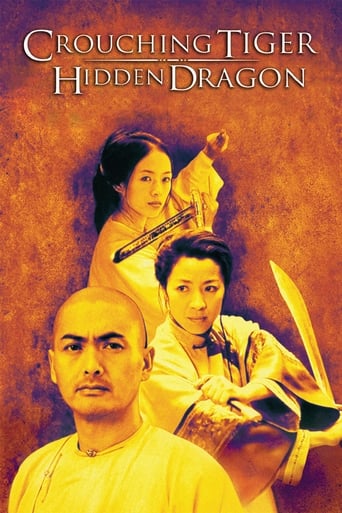

Continue the director
Crouching Tiger, Hidden Dragon (2000)
Lee's martial-arts romance shows his gift for combining visual poetry with emotional restraint, and it is a good companion to this film's lyrical approach.
See what influenced it
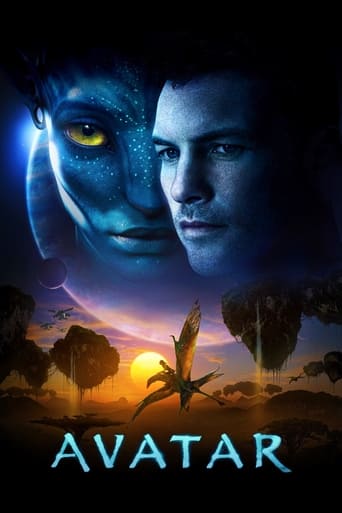
Avatar (2009)
The 3D and digital-effects breakthrough that made a film like this possible, built around a very different kind of spectacle.
Compare another approach
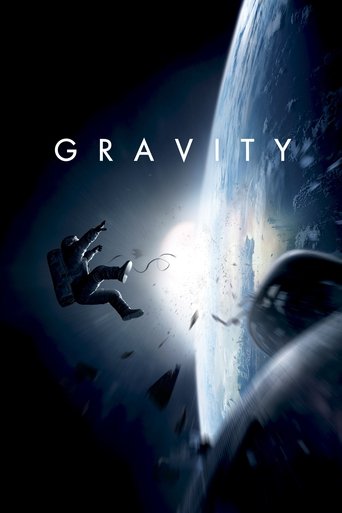
Gravity (2013)
A survival story with one main character in a hostile setting, also using 3D for immersion. Compare how each film handles solitude and faith.
Follow the idea
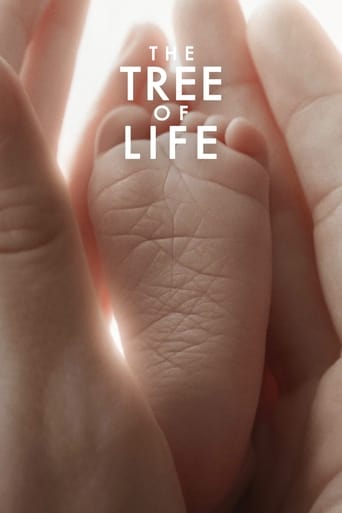
The Tree of Life (2011)
Another film that treats nature, wonder and the search for meaning as questions of faith, in a more experimental form.