Drama · Music
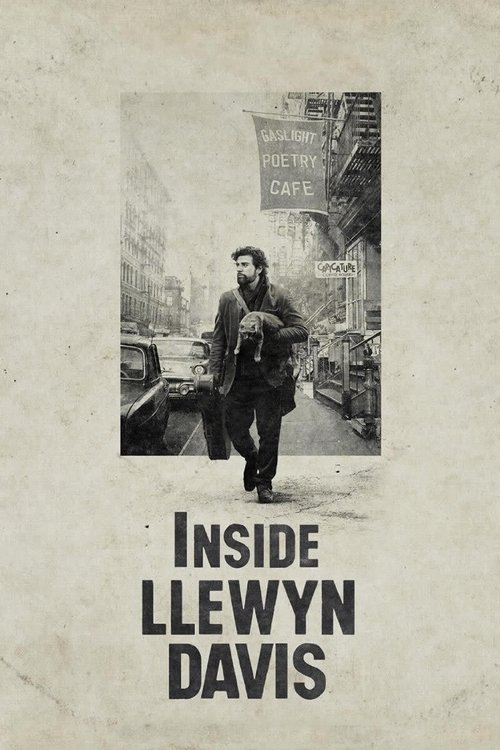
Inside Llewyn Davis
American
2013 · Directed by Joel Coen & Ethan Coen · 105 min


Drama · Music
American
2013 · Directed by Joel Coen & Ethan Coen · 105 min










Meaning, unpacked
Central idea
The film can be read as an inquiry into what talent is owed. Llewyn is good, and he knows it, but the film keeps asking whether quality alone earns anything, or whether character, luck and timing matter as much.
What it means
On the surface, a struggling folk singer spends a cold week in Greenwich Village, drifts to Chicago and back, and ends up exactly where he started. The film cares about something else: what talent is owed. Llewyn is good, and he knows it. But does quality alone earn anything, or do character, luck and timing matter just as much? The film never answers tidily. Some people do recognise his gift. It just never turns into security.
The story is also about grief, art and money, and how we treat the people who help us. The loss of his former singing partner hangs over everything he does, as if he is still performing for someone who isn't there. He leans on friends, then repays them badly, and the film shows his charm and his cruelty as parts of the same defence. Meanwhile the people around him keep measuring music by what it might earn. In Chicago, after a long, miserable journey, he sings one song and gets a short, unemotional verdict. The film refuses to cushion the blow.
Why it mattered
When the film appeared, it offered a different kind of musician drama. Instead of the usual rise-and-triumph arc, the Coens built an episodic, circular story where meetings and detours matter more than progress. It won the Grand Prix at Cannes in 2013, the festival's second-ranking prize, and was a major boost for Oscar Isaac, then little known in leading roles.
It also showed what a music film could do. The songs were performed and recorded live on set, under T Bone Burnett's direction, so the hesitations and breaths stay in. Music carries the story rather than interrupting it. Bruno Delbonnel's pale, low-contrast photography gives the look of a faded record sleeve, drawing on the cover of Bob Dylan's The Freewheelin' Bob Dylan, then undercutting that romantic image of Village winter.
Before anyone tells you what to think: what did you make of it?
Log in to rate it and leave commentsIt takes one click with Google or an email link. You come straight back here.
Rate it, keep your notes, and find the next film.
Free, no ads. Your journal, your lists, a Cine Guide that remembers you.
Create your free spaceThe film helped define a mode of musician drama that is wary of triumph and biopic formula, and its Village setting shaped how later films approached the same scene. It also marked Oscar Isaac's arrival as a leading man. Beyond cinema, it renewed interest in Dave Van Ronk, whose memoir inspired it and whose album Inside Dave Van Ronk is echoed in the title. The soundtrack grew into a 2013 New York concert, Another Day, Another Time, with artists including Joan Baez and Marcus Mumford.
At the Oscars it received two nominations, for cinematography and sound mixing, and won neither. Critics praised Isaac, the music and the photography, though some found it bleak or distant, and it earned modest box-office returns for a Coen film. Its reputation has grown since. Many now count it among their strongest and most emotionally precise films. Llewyn became shorthand for the gifted artist who doesn't win, though the film's gentler suggestion may be that the song survives anyway.
What happens
The film loops back to the Gaslight, and now you see why Llewyn was beaten: he heckled the stranger's wife the night before. A young singer, Bob Dylan, follows Llewyn onstage. Llewyn leaves and is beaten again.
The last image
Llewyn lies in the alley after the beating, while the stranger limps away.
What it says
Llewyn's week has changed almost nothing. He ends where he began, while a new talent quietly arrives. The loop shows a gifted man stuck in his own habits, as the world moves on without him.
Or follow an idea from this film
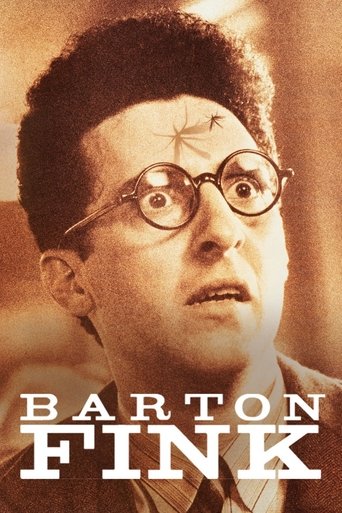

Compare another approach
Barton Fink (1991)
Another Coen study of an artist and his surroundings, with a more surreal edge. Comparing the two shows how the Coens change tone while keeping the same questions.
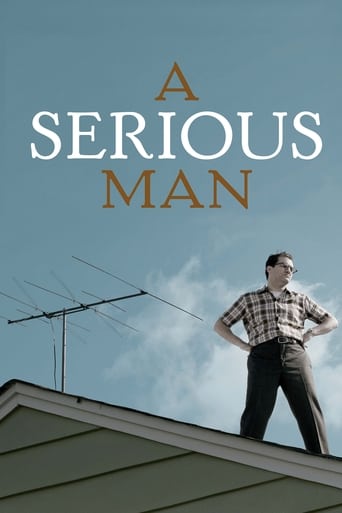
Continue the director
A Serious Man (2009)
A smaller, more personal Coen film about a man whose life makes no sense. It shares Llewyn's dry comedy and sense of an indifferent universe.
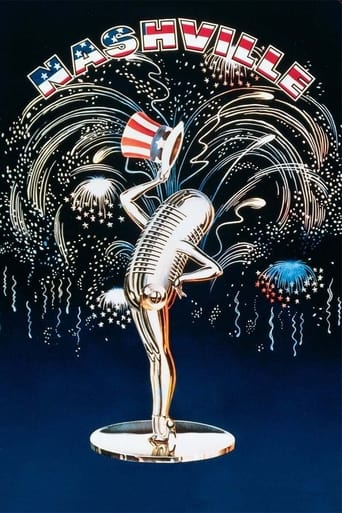
Follow the idea
Nashville (1975)
Robert Altman's ensemble film about a music scene shows the same world with a wider lens, folding songs and performance into social portrait.
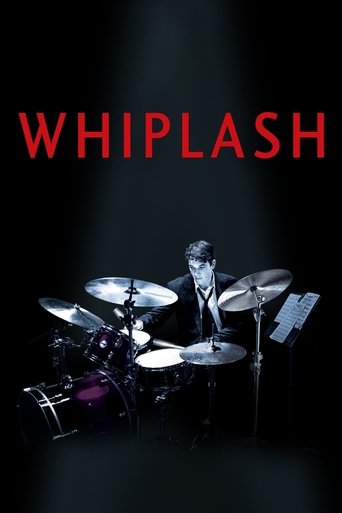
Jump forward
Whiplash (2014)
Released a year later, it also treats musical talent as a hard, costly pursuit, but with a very different, more combative tone.