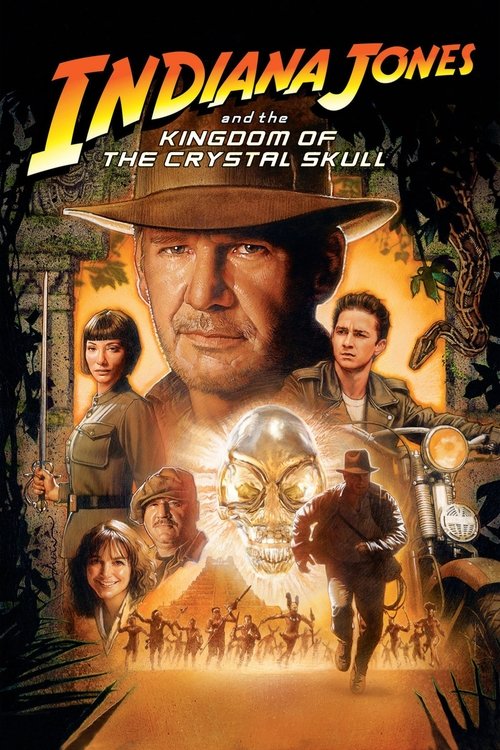
Adventure · Action
Indiana Jones and the Kingdom of the Crystal Skull
American
2008 · Directed by Steven Spielberg · 122 min


Adventure · Action
American
2008 · Directed by Steven Spielberg · 122 min











Meaning, unpacked
Central idea
The film can be read as a story about a pulp hero outliving his own era: the 1930s mixed religion and Nazis, while 1957 brings science, secrecy and Cold War fear, and Indy must adapt without losing what makes him himself.
What it means
It's 1957, Indiana Jones is older, and Soviet agents are chasing a crystal skull to the temple of Akator. But the more interesting question is what the film is trying to say. At its heart, this is a story about a pulp hero outliving his own era. In the 1930s Indy fought Nazis and chased religious relics. Now the fear is science, secrecy and the bomb, and the American establishment even treats him as a suspect. He has to adapt without losing what makes him himself.
The series has always set the archaeologist who studies things against the villains who want to own them; here the prize is knowledge itself. With Marion returning and young Mutt beside him, the film also asks who inherits this life, and what Indy owes the people he left behind. Behind it all sits one question the film seems to ask of itself: what happens when the adventure is over, and you're still standing?
Why it mattered
Each Indiana Jones film borrows the pulp of its imagined decade. The first three drew on serials and adventure tales; this one turns to fifties B-movies, flying saucers and the myth of secret government storage. It was the first Indy film since 1989, with Spielberg, Lucas, Harrison Ford and John Williams all back, and an early, prominent example of the modern revival sequel.
It also shows Spielberg's classical clarity at work. The jungle chase keeps its geography clear, its props matter and its gags are built into the movement, all staged largely with real vehicles, sets and stunt teams. A common myth says the film is mostly computer-generated, but digital work mainly extended sets and made some creatures and the finale. The mix can feel uneasy, and that is part of why viewers disagree.
Before anyone tells you what to think: what did you make of it?
Log in to rate it and leave commentsIt takes one click with Google or an email link. You come straight back here.
Rate it, keep your notes, and find the next film.
Free, no ads. Your journal, your lists, a Cine Guide that remembers you.
Create your free spaceCritics were divided. Many welcomed the return of Ford, Spielberg and Williams and praised the action, while others found the plot and digital effects uneven and the finale a jarring leap. Audiences came in large numbers, though fan reaction was sharply split. It confirmed that a decades-old hero could carry a major release, and its mixed reception shaped how the series was approached again in Indiana Jones and the Dial of Destiny.
Its legacy is partly a phrase. "Nuking the fridge" now names an action stunt too absurd to believe, in the manner of "jumping the shark", and the backlash became a talking point about nostalgia that South Park lampooned. Its reputation remains contested, but defenders point to the set pieces and Spielberg's craftsmanship, and reconsiderations have grown kinder as nostalgic revivals have multiplied.
What happens
At Akator, the skull is returned to its alien owners. Spalko is overwhelmed by their knowledge and destroyed, and the temple collapses as their saucer departs. Indy, Marion and Mutt escape, and Indy and Marion finally marry.
The last image
Mutt reaches for Indy's fedora at the wedding, but Indy takes it back and puts it on his own head.
What it says
Indy gets his family, but not a retirement. The hat shows Mutt is not handed the legacy yet. Spalko wanted knowledge to own, while Indy gives it back and is left with people instead of treasure.
Or follow an idea from this film
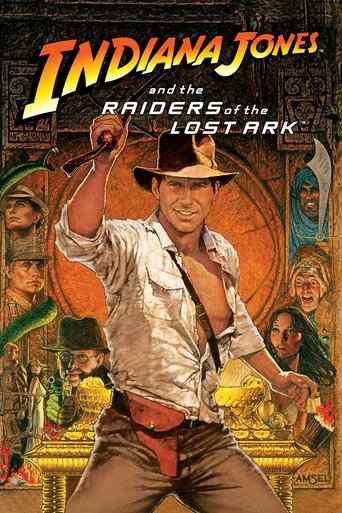

See what influenced it
Raiders of the Lost Ark (1981)
The original film shows the formula that Crystal Skull revisits, and it makes the new film's echoes, jokes and changes easier to measure.
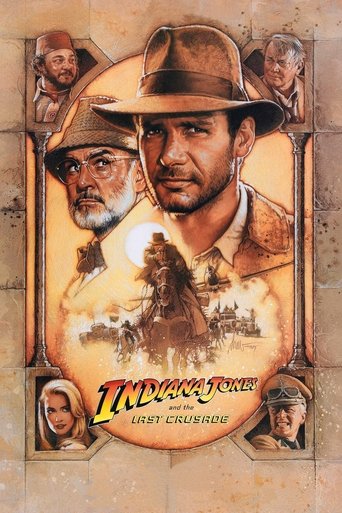
Continue the director
Indiana Jones and the Last Crusade (1989)
Spielberg's previous Indiana Jones film, with a cleaner balance of humour, adventure and emotional stakes, offers a useful comparison.
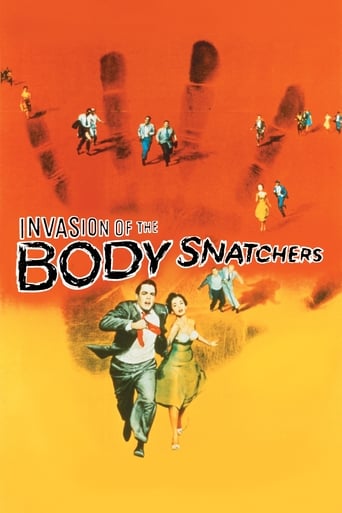
Explore the era or movement
Invasion of the Body Snatchers (1956)
A classic of the Cold War paranoia that Crystal Skull uses as its period backdrop, showing how 1950s genre films turned fear into pulp.
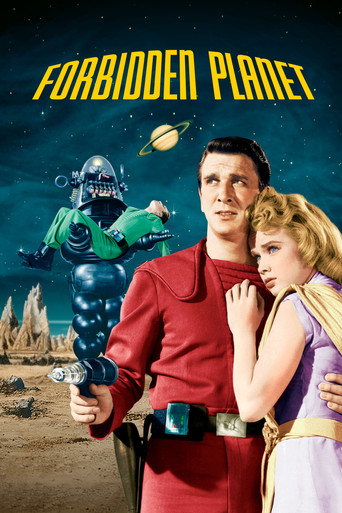
Follow the idea
Forbidden Planet (1956)
An influential 1950s science-fiction adventure whose ideas about lost civilisations and vast hidden knowledge fit the mythology the film draws on.
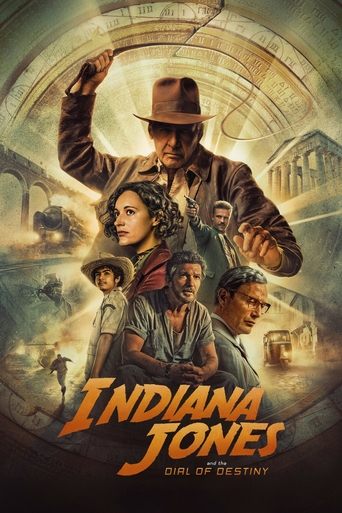
Jump forward
Indiana Jones and the Dial of Destiny (2023)
The series' final chapter, which follows an even older Indy and shows how the franchise handled nostalgia and ageing after this film.