Drama · War · Mystery
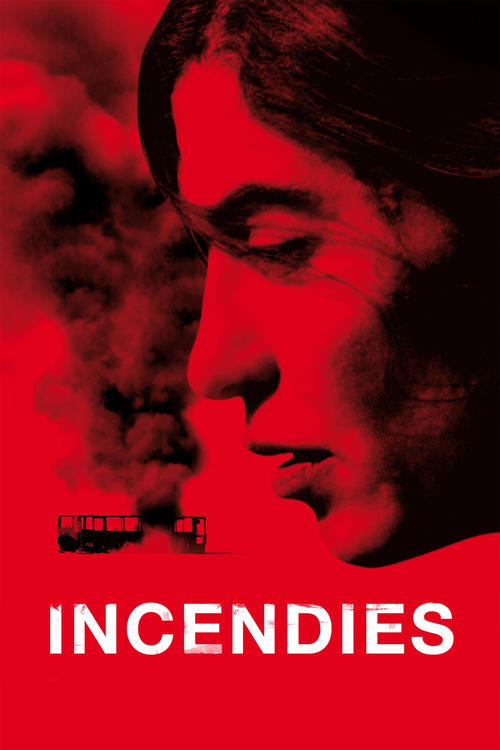
Incendies
Canadian
2010 · Directed by Denis Villeneuve · 131 min


Drama · War · Mystery
Canadian
2010 · Directed by Denis Villeneuve · 131 min









Meaning, unpacked
Central idea
The film can be read as a study of how violence passes down through generations, and of whether a story told truthfully, even a terrible one, can break that chain. Nawal's final gift to her children is knowledge, and the possibility of mercy.
What it means
After their mother Nawal dies, the twins Jeanne and Simon follow her last wishes and search for a father and a brother they never knew existed. The film is about what that search uncovers. At its heart is a question: how does violence pass down through generations, and can a story told truthfully, even a terrible one, break the chain? Nawal's final gift to her children is knowledge, and with it the possibility of mercy.
The themes grow from there. Hatred, guilt and trauma are handed to children who never made them. Jeanne and Simon learn that knowing your parents means knowing what they endured and what they did, so who you are is discovered, not given. Nawal's silence, her singing in prison and her letters each ask what the truth costs and what it can repair. Her choices are shaped by love, in a world divided by religious and political enmity. Even the twins' maths-driven thinking, "one plus one equals one", finds a tragic answer: some truths cannot be solved by logic alone.
Why it mattered
Incendies took Wajdi Mouawad's play and rebuilt it as a mystery in which present and past answer each other. Each discovery by the twins brings a scene from Nawal's life, so you learn alongside them. It was a way of approaching political history without lecturing, and it showed that stage tragedy and war history could reach a mainstream audience.
The filmmaking is restrained. Andre Turpin's camera favours wide, dry landscapes and still, close faces, and slow movement creates dread before anything happens. The film trusts Lubna Azabal's face to say what dialogue cannot. It never names its country, which keeps it fable-like, a tragedy that could belong to any war, while its details recall Lebanon. It makes its greatest horror out of small physical details, such as the quiet swimming pool scene.
Before anyone tells you what to think: what did you make of it?
Log in to rate it and leave commentsIt takes one click with Google or an email link. You come straight back here.
Rate it, keep your notes, and find the next film.
Free, no ads. Your journal, your lists, a Cine Guide that remembers you.
Create your free spaceThe film premiered at the Venice Film Festival in 2010 and was shown in Toronto. Critics called it powerful and demanding. It won major Canadian awards and built strong word of mouth abroad. Then came an Academy Award nomination for Best Foreign Language Film, for Canada, which brought it a wide international audience. It established Denis Villeneuve as a director of serious, large-scale, emotionally grounded cinema, a path that runs through Prisoners, Sicario and Arrival to Dune.
Today it is often named among the best Canadian films of its decade, and many see it as Villeneuve's most emotionally powerful early work. A few viewers find its coincidences close to melodrama, a fair objection that is part of the conversation. Teachers use it in classes on war, memory and migration, and its final revelation has become a reference point for how cycles of violence pass between generations. It also sent new audiences toward Mouawad's theatre.
What happens
Jeanne and Simon learn that their father and their brother are one man: Nihad, Nawal's lost son, who became her torturer Abou Tarek. They bring him her letters, then go to her grave to accept it.
The last image
The twins stand at Nawal's grave, where she is finally named and mourned, and begin to take in what she has left them.
What it says
The ending turns the search into mercy. Nawal's letters ask her children to break the cycle of anger, so the film closes on a choice rather than a verdict. Truth is painful, but it is what makes forgiveness possible.
Or follow an idea from this film


Continue the director
Arrival (2016)
Villeneuve's most emotionally focused later film, in which a mystery again leads to a personal revelation about time, memory and loss.
Compare another approach
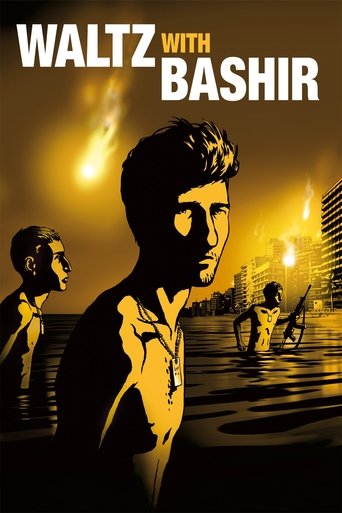
Waltz with Bashir (2008)
An animated documentary about the 1982 Lebanon war, in which a man investigates his own forgotten past. A useful nonfiction companion on memory and war.
See what influenced it
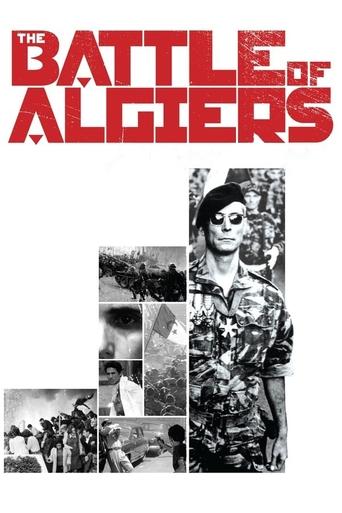
The Battle of Algiers (1966)
A near-documentary account of a colonial conflict that shows how modern political cinema can portray violence on all sides without comfort.

Follow the idea
The Official Story (1985)
A woman slowly discovers the hidden truth about her family under a dictatorship, a quieter relative of Incendies' investigation into the buried past.

Jump forward
Dune (2021)
Shows where Villeneuve's patience, landscape and mood led once he had a blockbuster budget.