

Drama · History
The Ten Commandments
Avg rating 8.0 / My rating TBC
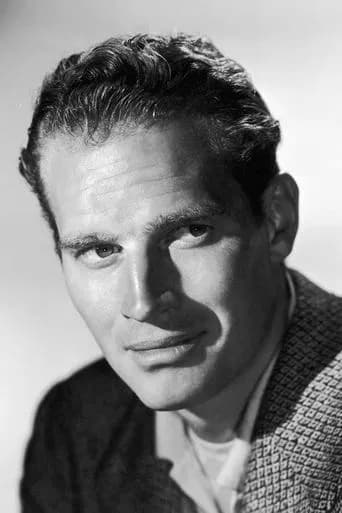
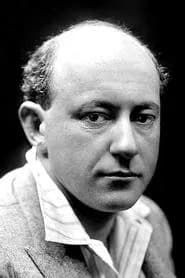
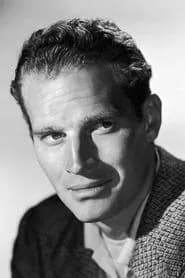
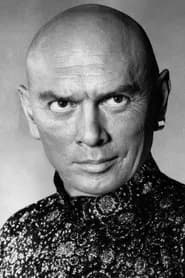
1956 · Directed by Cecil B. DeMille · With Charlton Heston, Yul Brynner, Anne Baxter
- Biblical Epic
- Historical Epic
- Classical Hollywood
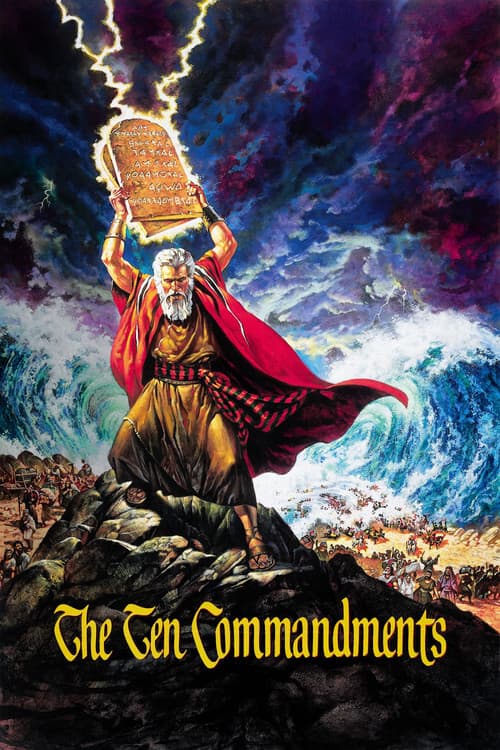
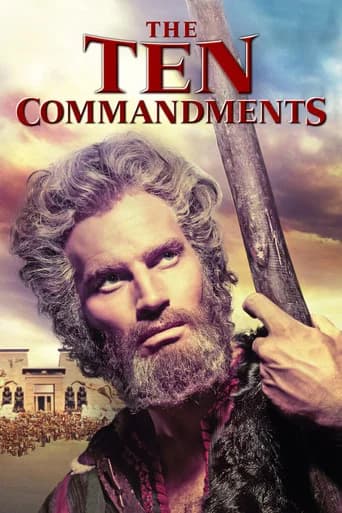
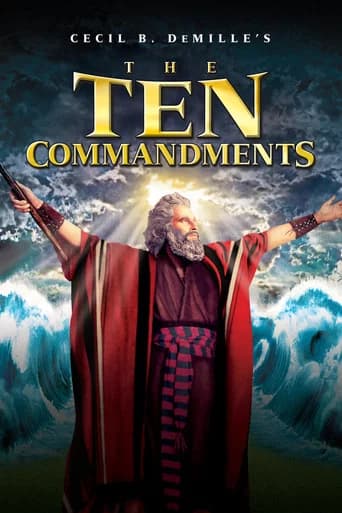
A Hebrew infant is raised inside Pharaoh's palace as an Egyptian prince, with every advantage of rank. As he grows, his place in Egypt and his sense of who he is begin to pull against each other. DeMille tells the story of Moses on the largest scale Hollywood could manage.
Film info
- Runtime
- 3h 40m · 220 min
- Format
- Technicolor and VistaVision, framed widescreen. Elmer Bernstein's large orchestral score carries much of the emotion.
- IMDb
- 7.9 / 10 (83,457 votes)
- Rotten Tomatoes
- 82% (critics)
- TMDB
- 7.8 / 10 (audience, 1,936 votes)
- Trailer
- ▶ Watch the trailer

Before watching
Spoiler-free · about 2 minutes
Short on time? Spoiler-free
A 3-minute summary
Why watch this?
The defining Hollywood biblical epic, by its master
Cecil B. DeMille's last film, and a remake of his own 1923 version, is the fullest statement of the genre he helped create. It is the template for the biblical spectacle.
Studio spectacle at its absolute peak
Thousands of extras, vast sets, location work in Egypt, Technicolor and VistaVision. It shows what Hollywood offered against television in the 1950s, and its effects work won the film's only Oscar.
A very different kind of storytelling
Declamatory acting, tableau staging and a sermon-like tone feel unlike modern cinema. Seeing it on its own terms shows how epic, faith and showmanship once fitted together.
Why it matters in cinema history
The summit of the Hollywood biblical epic and of the roadshow spectacle, and the closing statement of a career that ran from the earliest feature films to the widescreen era.
Watch with intention
Your lens
Watch it as a piece of grand theatre and showmanship, where gesture, colour and scale carry the meaning as much as psychology does.
Three things to notice
- How actors are placed in the frame like figures in a religious painting, with stylised gestures and formal, declamatory speech.
- The use of colour in costume and set design to separate the Egyptian court from the Hebrew slaves and from the desert.
- How the story is built around personal rivalry and romance in the palace before the larger public drama takes over.
One question to carry with you
When a film treats a sacred story as a human drama, where do love, rivalry and ambition sit next to faith?
- Industry
- By the mid-1950s television was cutting into cinema attendance. Studios answered with scale: widescreen formats, colour, long running times and event-style releases that a small screen could not match.
- Technology
- Paramount's VistaVision gave a large, sharp image, and Technicolor saturated it. Optical effects, mattes and tank photography were pushed hard for the film's set pieces.
- Dominant styles
- Religious and ancient-world epics were booming after Quo Vadis (1951) and The Robe (1953). They offered spectacle, moral seriousness and a form of respectability under the Production Code.
- Director's moment
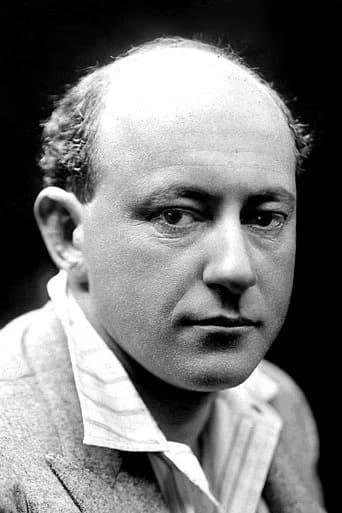
- DeMille had made a silent Ten Commandments in 1923. Here he returned to the story as a veteran showman, and he appears on screen to introduce it personally.
Where it came from
Film
The Ten Commandments (1923)
DeMille's own silent version, a hit that established him as the master of spectacle and gave him a story to return to.
Film
Ben-Hur (1925)On Cinespective
The silent biblical-era epic that set the model for huge sets, crowds and a faith-inflected spectacle.
Tradition
Illustrated Bibles and religious pageantry
DeMille's tableau staging and moral rhetoric draw on Victorian biblical illustration and stage pageants.
This film
The Ten Commandments (1956)
New at the timeIt combined biblical material with an unprecedented scale of production, shooting partly in Egypt and using then-state-of-the-art effects, as a prestige event rather than a genre programmer.
- Cold War and religious revival
- 1950s America saw rising church attendance and the addition of "under God" to the Pledge of Allegiance in 1954. Set against "godless communism", a story of freedom from tyranny fit the public mood.
- DeMille's politics
- DeMille was a vocal conservative and anti-communist. He appears on screen in a prologue to present the story as a struggle between liberty under God and rule by a tyrant.
- The filmmaker's situation
- In his seventies and in declining health, DeMille was remaking his own 1923 silent film. It was his final film as director, and he approached it as a summation of his career.
- Audience and cost
- Hollywood was losing viewers to television and suburban life. Paramount backed an enormous, long production, shot partly on location in Egypt, as a way to bring families back to cinemas.
- Pace
- Slow and stately, with a long running time. There are an overture, an intermission and exit music in the original roadshow format.
- Style
- Theatrical and operatic: formal dialogue, broad gestures, heightened emotion and sermon-like narration. Its seriousness is sincere, not ironic.
- Performance
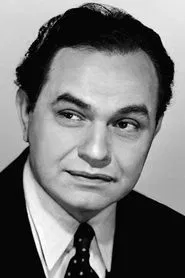
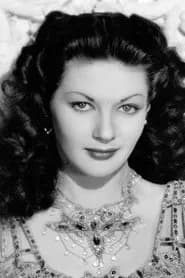
- Charlton Heston and Yul Brynner lead with statuesque presence, while supporting players such as Edward G. Robinson and Anne Baxter play with melodramatic relish.
- Format
- Technicolor and VistaVision, framed widescreen. Elmer Bernstein's large orchestral score carries much of the emotion.
- Effects
- Effects are from the 1950s: mattes, tanks and optical compositing. Their craft impresses even where they are visibly of their time.
8+
Suggested age
Older children
Rated G in the US and U in Britain, but FSK 12 in Germany; given the 220-minute length, biblical themes and some intense scenes, 8 suits watching together.
Official ratings
- USG
- UKU
- Germany12
- FranceTP
Good for
Spectacular sets, huge crowds and colourful costumes, along with big-screen drama and music. Children who enjoy epic storytelling or Bible stories may be absorbed, especially if you watch in two sittings.
May unsettle
- Peril: Some sequences are tense and urgent, with large groups in danger. Moments of threat to children appear, though they are not graphic.
- Scary imagery: Supernatural effects and ominous sights are staged with dated but eerie visuals, which may frighten sensitive younger children.
- Violence: Stylised, non-bloody violence, including cruelty toward enslaved people and some deaths. Brief and not gory, but it can be upsetting.
- Pace: At over three and a half hours with an intermission-style structure, long stretches of formal dialogue may test younger viewers' attention.
Explain first
- It is a 1956 Hollywood retelling of a biblical story, with theatrical acting and grand speeches typical of the era.
- The story is set in ancient Egypt, where slavery and absolute rulers are central, so a little background helps.
- Special effects are from the 1950s, so they look old-fashioned. It can help to mention that before you start.
Talk about it after
>When is it right to stand up for what you believe is fair, even when it is difficult, and what might make that hard?
Cinespective's own guidance, a draft: check it against the official ratings and your own judgement. Second opinions: Common Sense Media, IMDb (see its Parents Guide). Ratings from TMDB.