Crime · Drama
Dheepan
French
2015 · Directed by Jacques Audiard · 115 min


Crime · Drama
French
2015 · Directed by Jacques Audiard · 115 min








Meaning, unpacked
Central idea
The film is about the cost of starting again. It can be read as asking whether a person can leave violence behind, or whether survival skills learned in war remain part of him in a peaceful country.
What it means
Three strangers pose as a family to get out of a camp and into France, and end up on a troubled estate. But the film is really about the cost of starting again. Can a person leave violence behind, or do the skills he learned in war follow him into a peaceful country? Dheepan's past as a fighter does not stay in Sri Lanka, and the film asks what peace demands of someone who was trained for war.
Look first at the family. Dheepan, Yalini and the girl, Illayaal, begin as a paper arrangement, a performance to pass a bureaucratic gate. Then routine, care and shared fear slowly make it real, earned in small, daily ways, never sentimentally. Around them, the film shows how invisible they are: useful as caretakers and home carers, barely seen, and isolated by words they cannot understand. At the end, the estate becomes a territory to defend, and the film asks what safety means when a home is not safe.
Why it mattered
Audiard keeps the story grounded in routine, then lets genre in. The first half is close to social realism, but the last act shifts into action-film mode as Dheepan's old skills return. The genre serves his trauma instead of letting him escape it. Audiard's control of tone, from tenderness to violence, is the film's main achievement.
It won the Palme d'Or at Cannes in 2015, but the response was sharply split. Many praised the performances, the sense of place and the humane focus on refugees. Others felt the violent ending turned a thoughtful social story into a conventional genre one, and some criticised how it treats the banlieue. It also arrived as Europe's migrant crisis dominated the headlines, so many read it as a human-scale counterpoint to the news.
Before anyone tells you what to think: what did you make of it?
Log in to rate it and leave commentsIt takes one click with Google or an email link. You come straight back here.
Rate it, keep your notes, and find the next film.
Free, no ads. Your journal, your lists, a Cine Guide that remembers you.
Create your free spaceThe film strengthened a strand of European cinema that puts refugee and immigrant characters at the centre of genre-aware stories, not just documentary-style realism. It fed French debates about the banlieues and how immigrants are received there, and it brought wider attention to Sri Lankan Tamil experience.
Today it is generally seen as one of Audiard's most politically engaged films and an important European portrait of migration. The argument over its ending continues. But its tonal control and its refusal to idealise either the refugees or the estate keep it talked about. So ask yourself whether the ending feels like a betrayal of the film, or its most honest moment. The film leaves that open.
What happens
Dheepan fights through the building to reach Yalini, and his war skills return in a bloody rescue. The film then moves to England, where the three live together with a baby. Whether that is real or imagined is left open.
The last image
In England, the three live together as a family with a baby, in a calm that feels almost too gentle after the violence.
Two readings
What it says
The ending asks whether peace is possible for someone trained for war. Dheepan defends his home with violence, then the film grants him a gentler future. You decide whether that is a reward, or a wish.
Or follow an idea from this film
Continue the director
A Prophet (2009)
Audiard's prison drama is his breakthrough and a natural companion: another outsider learning the rules of a hostile closed world.
Coming soon


Compare another approach
Rosetta (1999)
A stripped-down portrait of a young woman fighting to survive and work, shot with a physical immediacy that contrasts with Audiard's more stylised approach.

Follow the idea
Journey of Hope (1990)
An earlier European film about migrants seeking a better life, showing the journey that Dheepan treats as already behind its characters.

Compare another approach
Taxi Driver (1976)
Another story of a damaged veteran in a hostile city, ending in violence that can be read as rescue or breakdown.
Explore the era or movement
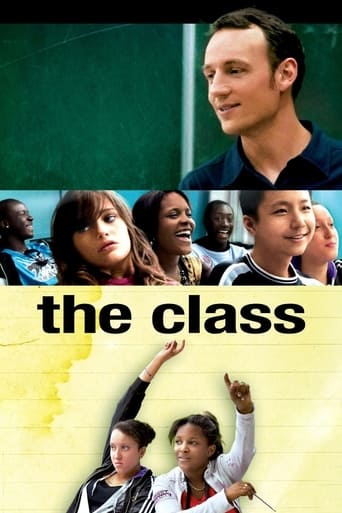
The Class (2008)
A French school drama about a diverse Parisian community, offering another view of how contemporary France sees itself.


