Drama
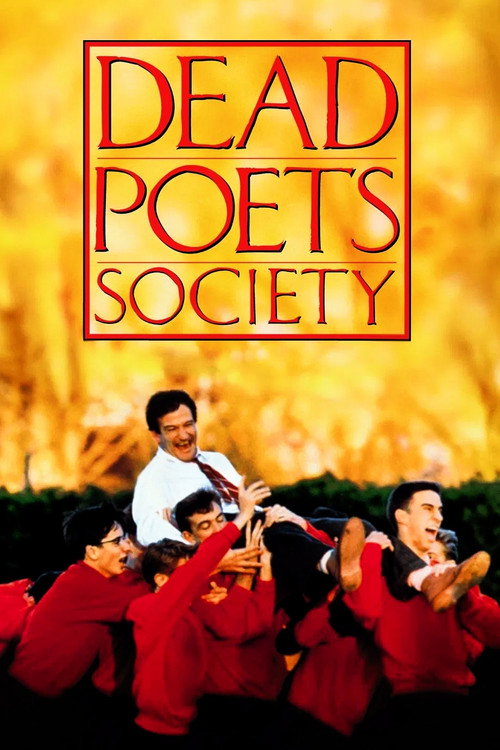
Dead Poets Society
American
1989 · Directed by Peter Weir · 129 min


Drama
American
1989 · Directed by Peter Weir · 129 min












Meaning, unpacked
Central idea
The film explores the tension between conformity and self-expression: whether education should prepare young people to fit into a prescribed life or help them discover their own. It can also be read as a warning that inspiration without guidance has costs.
What it means
At its heart, Dead Poets Society asks one question: should education prepare young people to fit into a prescribed life, or help them discover their own? The school answers with four pillars: tradition, honour, discipline and excellence. Keating, the English teacher, answers with a call to think for yourself. The film sides with him, but it also shows how fragile that choice is, and it can be read as a warning that inspiration without guidance has a price.
The film is more open than its reputation suggests. Keating doesn't simply tell the boys to rebel. Look again at his lessons: they stress independent thought and the appreciation of poetry. Whether his influence carried some boys too far, and who owns that responsibility, is left unanswered. The fathers plan their sons' futures with love and with control, and affection turns into pressure when a child's wishes go unheard. Even carpe diem cuts both ways. It inspires the boys, but it also pushes some toward decisions they are not ready for.
Why it mattered
In 1989 the film arrived as a defining American school drama, and it fixed the template of the unconventional teacher. It became a kind of shorthand for the argument between conformity and self-expression. Peter Weir, who came from the Australian New Wave of Picnic at Hanging Rock, brought an outsider's eye to an American institution. He built the school as an atmosphere before it became a plot: ritual, uniform, bells and architecture.
Before anyone tells you what to think: what did you make of it?
Log in to rate it and leave commentsIt takes one click with Google or an email link. You come straight back here.
Rate it, keep your notes, and find the next film.
Free, no ads. Your journal, your lists, a Cine Guide that remembers you.
Create your free spaceIt also showed what Robin Williams could do. Known for manic comedy, he played a teacher whose energy was shaped by warmth and restraint, and he earned an Oscar nomination for Best Actor. Tom Schulman's screenplay won the Oscar for Best Original Screenplay, using poetry as both plot and character.
The film was a commercial success and one of the notable hits of 1989. It earned four Oscar nominations, including Best Picture and Best Director. Some critics found it sentimental, or too tidy in its argument, but audiences responded strongly. It set the template for the inspirational-teacher film, and you can follow that line to Dangerous Minds, Mr. Holland's Opus and Freedom Writers. Carpe diem and "O Captain! My Captain!" entered everyday speech, and the film is still shown in English classes and teacher training.
Today it remains widely loved, but some ask whether Keating is as ideal as he first seems. Watch it again with that question, and it feels less inspirational and more ambivalent. After Williams died in 2014, fans paid tribute by standing on desks, which shows how deeply the film's final image has settled into memory.
What happens
After Neil's suicide, the school blames Keating and fires him. As he leaves, Todd stands on his desk and says "O Captain! My Captain!", and other boys follow. Keating's lessons survived the school's pressure, though not without cost.
The last image
Boys stand on their desks as Keating, moved and grateful, watches them from the doorway.
What it says
The ending says that a teacher can open a door but cannot control what lies beyond it. The film sides with free thought, yet the desks celebrate loyalty while leaving open the price paid, especially by Neil.
Or follow an idea from this film


Compare another approach
if.... (1969)
Another boarding-school story, but one in which rebellion turns violent. Comparing it shows how differently the same institution can be imagined.
Follow the idea
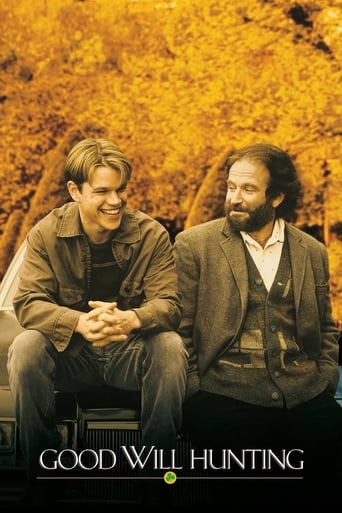
Good Will Hunting (1997)
Robin Williams again plays a mentor who sees a young person's potential, and the film asks what guidance owes to the one guided.

Jump forward
Whiplash (2014)
A darker modern take on the inspiring teacher, questioning whether harsh pressure or warm encouragement better produces a free artist.

Continue the director
The Truman Show (1998)
Peter Weir again examines a constructed, controlling world and the desire to break out of it, with Jim Carrey in a dramatic role.
Explore the era or movement
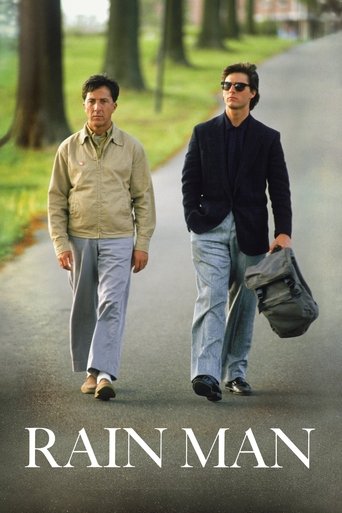
Rain Man (1988)
Another late-1980s Hollywood drama built around a star performance and an emotional bond, from the same moment in popular cinema.