

Drama · Horror · Science Fiction
Frankenstein
Avg rating 8.4 / My rating TBC
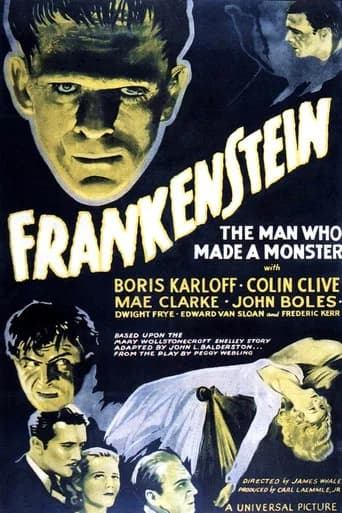
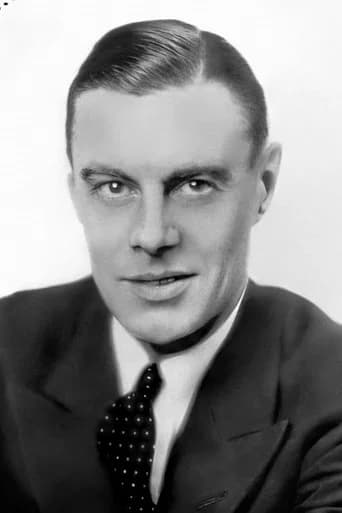
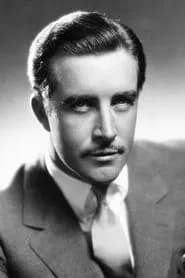
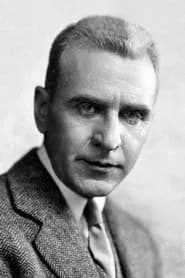
1931 · Directed by James Whale · With Colin Clive, Mae Clarke, John Boles
- Universal Horror
- Horror
- Early Sound
- Science Fiction
A young scientist, obsessed with the secret of life, shuts himself away in a remote tower to build a human being from stolen parts. His friends and family fear for his sanity. A short, stark Gothic tale in which ambition and its consequences move quickly.
Film info
- Runtime
- 1h 10m · 70 min
- Format
- Black and white, standard 1.37:1 frame, early sound with very little underscore.
- IMDb
- 7.7 / 10 (86,282 votes)
- Rotten Tomatoes
- 94% (critics)
- Metacritic
- 91 / 100
- TMDB
- 7.5 / 10 (audience, 1,857 votes)
- Trailer
- ▶ Watch the trailer
Before watching
Spoiler-free · about 2 minutes
Short on time? Spoiler-free
A 3-minute summary
Why watch this?
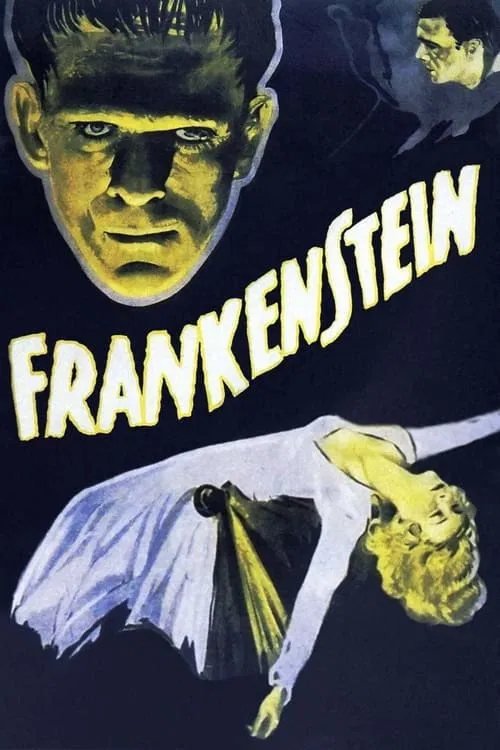
It created the screen monster as we know him
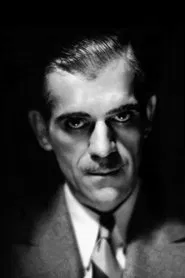
Boris Karloff's flat-headed, heavy-lidded creature, with Jack Pierce's makeup, became the template for the cinematic monster. The image is so familiar that it is hard to remember someone had to invent it.
The founding film of the Universal horror cycle
Following Dracula earlier in 1931, it established Universal's run of Gothic monster films and made horror a lasting studio genre, with James Whale as its most stylish director.
A study in sympathy
At 70 minutes, it asks you to fear the creature and pity him in the same scene. Karloff does this largely without words, using movement, hands and eyes.
Why it matters in cinema history
A defining film of Universal horror and the point where the Gothic monster story, German Expressionist design and early sound cinema combined into a genre that Hollywood kept reusing.
Watch with intention
Your lens
Watch it as a film about a made creature and the people who judge him, not only as a fright machine.
Three things to notice
- How the sets, such as the tower laboratory and the crooked village, look more like stylised stage designs than real places.
- How little music there is: storms, machinery and silence do the work that a score usually would.
- How Karloff uses his hands, his gait and his eyes to convey thought and feeling without much dialogue.
One question to carry with you
When the creature first appears on screen, is the film asking you to be afraid of him, or to wonder what he is?
- Technology
- Sound film was only about four years old. Cameras were still adapting, and music was sparse, so silence, wind, thunder and electrical hum carry much of the atmosphere.
- Industry
- Universal had just scored a hit with Dracula (1931). Under young production chief Carl Laemmle Jr., the studio moved quickly to find a follow-up in the same Gothic vein.
- Dominant styles
- Universal's Gothic look drew on German Expressionism: tilted spaces, stylised sets and heavy shadow, brought to Hollywood by émigré artists and the example of Caligari and Metropolis.
- Audience
- Depression-era audiences wanted escape and shock. The film was made before strict Production Code enforcement, so it could be frank about death and danger, and it still met censors' objections.
Where it came from
Tradition
Mary Shelley's Frankenstein and Gothic literature
The novel supplied the myth of a made being and an irresponsible creator, though the film draws more on a stage adaptation than on the book.
Movement
German Expressionism
Stylised sets, deep shadow and distorted spaces from films like The Cabinet of Dr. Caligari shaped Universal's Gothic look.
Film
Metropolis (1927)On Cinespective
Fritz Lang's film made the ecstatic laboratory and the scientist who creates an artificial being into a lasting screen image.
Film
Dracula (1931)
Universal's earlier hit that year proved there was a market for sound-era Gothic horror and set the studio's formula.
This film
Frankenstein (1931)
New at the timeIt gave sound-era horror a sympathetic, almost wordless monster, and treated science and the creation of life as a source of dread, not just a laboratory backdrop.
- Depression-era audiences
- The Depression was worsening in the US, with rising unemployment and bank failures. Cheap, sensational entertainment drew crowds, and Universal's horror cycle, begun with Dracula earlier in 1931, proved profitable.
- Postwar unease
- The First World War was still a recent memory. Its mass death and the new power of machines and science fed public anxiety about what human ingenuity might unleash, a worry that suits this story.
- Before strict censorship
- The Hays Code existed but was not yet enforced. This pre-Code window let studios show morbid and disturbing material. Even so, state censor boards cut some scenes, and religious and moral objections followed.
- An English director in Hollywood
- James Whale was a British stage and war veteran who came to Hollywood after directing successful plays and films. His success with Journey's End gave him the clout to take on this project. He was openly gay in a conservative era.
- Pace
- Fast and compact. At 70 minutes, scenes are short and the story moves briskly with no padding.
- Style
- Gothic and stagey, with expressionist sets, strong shadows and studio-built exteriors. It is more mythic than realistic.
- Performance
- Theatrical in the early-sound manner. Colin Clive is fevered and intense, while Karloff's largely wordless performance is the film's emotional centre.
- Format
- Black and white, standard 1.37:1 frame, early sound with very little underscore.
- Versions
- Some prints cut or trimmed a few moments for censors. Modern restorations put back what was removed, so check you have a complete version.
10+
Suggested age
Older children
The BBFC's PG points to 8, but Germany's FSK 16 is far stricter; as a tame yet still disturbing classic, 10 with a parent is a sensible middle.
Official ratings
- UKPG
- Germany16
Good for
Children curious about classic monster movies may enjoy the striking gothic sets, the famous laboratory sequence and a short, fast-moving story that sparks big questions about science and responsibility.
May unsettle
- Scary imagery: A stitched-together creature, a creepy lab and graveyard settings create a gothic, eerie atmosphere, though nothing is graphic by modern standards.
- Violence: Several moments of physical violence and menace, shown with little blood but with real force and sometimes cruelty.
- Distressing scenes: One sequence involving a young child may upset sensitive viewers, and a mob hunts the creature in a tense, frightening way.
- Dated style: Black-and-white, theatrical acting and a brisk, old-fashioned pace may feel strange to children used to modern films.
Explain first
- This is a 1931 black-and-white film, so the effects and acting look theatrical; its monster is now one of cinema's most famous images.
- The creature is not truly evil in the way a typical villain is; it's worth watching how others treat it.
Talk about it after
Who do you think is most responsible for what goes wrong in the story, and why? Is the creature ever to blame, or the people around it?
Cinespective's own guidance, a draft: check it against the official ratings and your own judgement. Second opinions: Common Sense Media, IMDb (see its Parents Guide). Ratings from TMDB.