Drama · Romance
Black Orpheus
French (Orfeu Negro)
1959 · Directed by Marcel Camus · 100 min


Drama · Romance
French (Orfeu Negro)
1959 · Directed by Marcel Camus · 100 min





Meaning, unpacked
Central idea
The film can be read as a story about how love and music try to hold off death in a society that dances through its hardships. The myth makes private feeling feel universal, while Carnival gives it a public, communal setting.
What it means
Black Orpheus moves the Greek myth of Orpheus to the hills of Rio, and at heart it is about love and music trying to hold off death. A tram conductor who plays the guitar falls in love during Carnival, while a figure in a skeleton costume hunts the woman he loves. Death is no distant idea here. He is in the crowd, in a costume, close enough to touch.
Carnival works two ways. Its masks give freedom and anonymity, but they also hide danger and let jealousy and fate move unseen. The film opens with a sunrise that Orfeu's guitar seems to coax upward, and the children believe it. It ends in tragedy, yet the children are given the guitar and a new sunrise. The myth becomes a cycle, and music carries on past any one life.
Why it mattered
In 1959 the film won the Palme d'Or at Cannes and the Oscar for Best Foreign Language Film, as a French entry, even though its story, music and cast were Brazilian. It was a major success abroad, praised for its colour, its music and its energy. It took an ancient tale and set it in a living city, so Rio's hills, trams and street dances gave the myth physical texture rather than museum solemnity.
It was also made in a fresh way. Jean Bourgoin's saturated colour photography used Rio's real hills and skies, so the city feels dreamlike but stays physically real. Filming took place in the hillside neighbourhoods during Carnival, with real crowds and real light. Guitar, drums and dance steps are woven into the movement and the editing, so it plays almost like a musical without staged numbers. Its almost entirely Black cast was unusual for an internationally celebrated film of its time.
Before anyone tells you what to think: what did you make of it?
Log in to rate it and leave commentsIt takes one click with Google or an email link. You come straight back here.
Rate it, keep your notes, and find the next film.
Free, no ads. Your journal, your lists, a Cine Guide that remembers you.
Create your free spaceIts music escaped the film. Luiz Bonfá's Manhã de Carnaval became a jazz standard, often sung in English as A Day in the Life of a Fool, and A Felicidade lived on too. The soundtrack gave bossa nova an early showcase abroad, and the film fixed an international image of Rio and Carnival that later films both used and challenged. Brazilian filmmakers answered it, including Cinema Novo and Cacá Diegues in his 1999 remake, Orfeu.
Today its songs and images are still loved, but its standing has shifted. It is not a portrait of Brazilian life. It is a French-directed myth in a stylised Rio, and opinion at home was divided from the start. Many have said it romanticises poverty and race. Perhaps that's the right way to hold it: a beautiful fantasy, and an outsider's one. Like Orfeu's song, it's easier to love than to trust, and the children are still waiting for the sun.
What happens
Orfeu carries Eurydice's body up the hill, but Mira throws a stone, and he falls to his death with her in his arms. The lovers are lost together. Then the story carries on without them.
The last image
At dawn, children take up Orfeu's guitar and play, and one girl insists the sun rises for them too.
What it says
The film follows the myth's tragedy, then turns it into a cycle. Orfeu dies, but the children inherit his guitar and their belief that music can raise the sun. Love is lost; music and faith are what survive.
Or follow an idea from this film


Compare another approach
Orphée (1950)
Cocteau's modern Orpheus uses the same myth in a cool, poetic Parisian register. Comparing the two shows how much a setting changes a story's feeling.
Jump forward
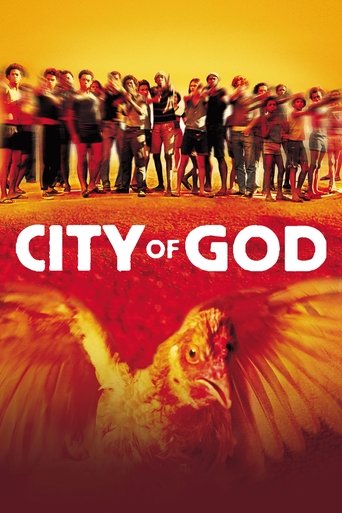
City of God (2002)
A Brazilian film about Rio's poor neighbourhoods, directed from within the culture. It is a sharp counterpoint to Camus's romantic vision.
Explore the era or movement
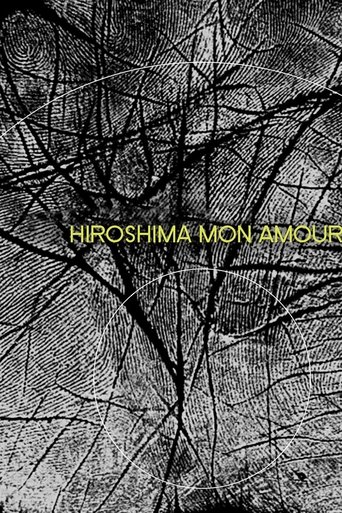
Hiroshima Mon Amour (1959)
Released the same year, it shows another side of late-1950s art cinema, with love, memory and history treated in a modernist way.
Follow the idea
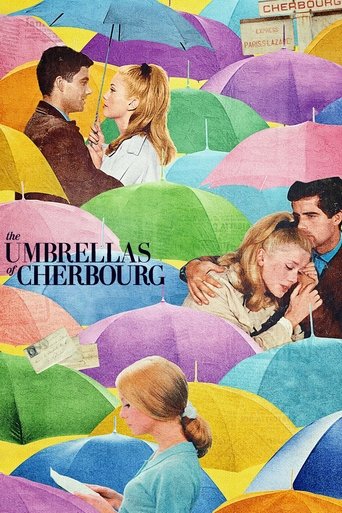
The Umbrellas of Cherbourg (1964)
Another colourful, music-driven European romance that turns a simple love story into something near myth, with every line sung.
Explore the era or movement
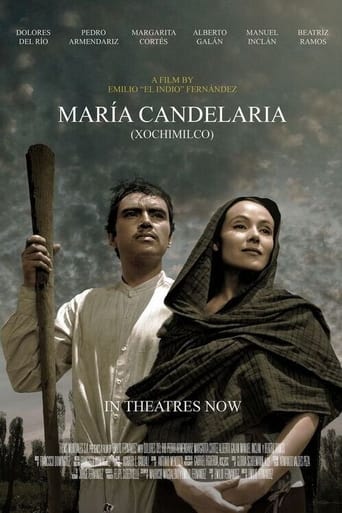
Maria Candelaria (1944)
A classic Latin American romance with a striking visual style, showing an earlier way of presenting local culture to international audiences.