Drama
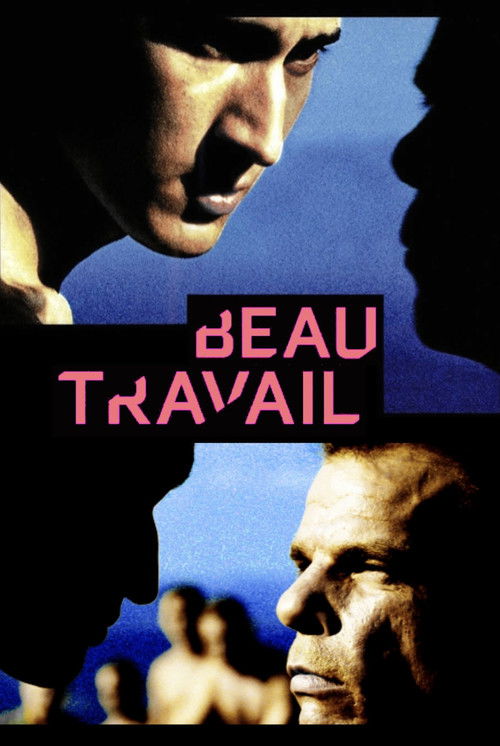
Beau Travail
French
1999 · Directed by Claire Denis · 93 min


Drama
French
1999 · Directed by Claire Denis · 93 min








Meaning, unpacked
Central idea
The film can be read as an exploration of how rigid male institutions shape desire, pride and identity, and what happens to a man whose entire sense of self depends on them. Order and tenderness sit uneasily side by side.
What it means
Galoup, a soldier in the French Foreign Legion in Djibouti, grows jealous of a calmer, more open recruit named Sentain, and the jealousy turns into cruelty. He tells it later, from a diminished life in Marseille. But that is only the outline. The film is really about how rigid male institutions shape desire, pride and identity, and what happens to a man whose whole sense of self depends on them. Order and tenderness sit uneasily side by side.
The drills, the grooming and the endurance are a performance of strength, yet the film keeps showing the vulnerability and desire that performance is meant to contain. So Galoup's hatred is slippery. You can read it as jealousy, as wounded pride, or as an attraction he cannot name inside the Legion's code. The film never says which. It also asks what these French soldiers, drilling in a former colony apart from the local people, are really defending, and for whom. And since Galoup narrates, you are hearing a man justifying himself.
Why it mattered
Beau Travail treats a military story without the usual combat or plot. Instead of battle, it gives you ritual, desire and the male body. Agnès Godard shoots skin, muscle and gesture in tight, unhurried frames, so routine labour begins to look like dance, while wide shots remind you how isolated these men are. The style itself becomes the argument about discipline.
The editing works the same way. Scenes are joined by association and emotional rhythm, not by clear chronology, and returning gestures and images add meaning the narration could not. Denis and co-writer Jean-Pol Fargeau kept the central triangle of Melville's Billy Budd but changed its setting, tone and emphasis, turning a naval tale into a memory-driven study of bodies and desire. Denis Lavant's tightly coiled performance carries pride and strain with very little speech.
Before anyone tells you what to think: what did you make of it?
Log in to rate it and leave commentsIt takes one click with Google or an email link. You come straight back here.
Rate it, keep your notes, and find the next film.
Free, no ads. Your journal, your lists, a Cine Guide that remembers you.
Create your free spaceCritics admired the film's visual poetry and Lavant's performance, and it brought Claire Denis wide international recognition. Some audiences found the sparse plot and elliptical form hard going, but its reputation grew steadily at festivals and in critical circles outside France. Its bodily, non-verbal approach encouraged later filmmakers to explore masculinity, institutions and desire through movement and image rather than dialogue.
Today it is seen as one of the key films of the 1990s and a high point of Denis's career, often taught for its use of the image and the body. Critics often read it through its homoerotic subtext, and it is a frequent reference in queer film discussion and in debates about postcolonial France. Its final dance is among the most cited scenes in modern cinema, widely shared online as a clip and a GIF.
What happens
Expelled from the Legion, Galoup lies on his neatly made bed in Marseille with his pistol. Then he dances alone in a nightclub. After a life of drill and silence, his controlled stillness gives way to sudden release.
The last image
Galoup dances alone in the nightclub to a pop song, moving freely for the first time.
Three readings
What it says
The film is about a man whose whole self was built by an institution. Denis leaves his fate unsettled because the question is what remains of him once the order is gone, and that cannot be answered with a plot.
Or follow an idea from this film

Continue the director
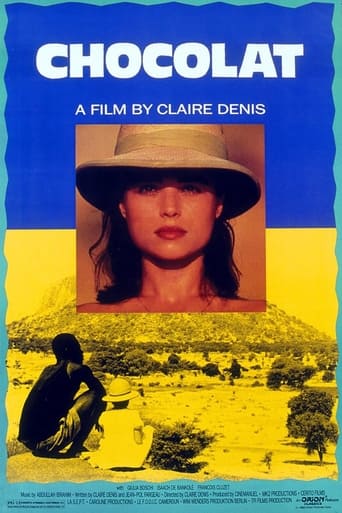
Chocolat (1988)
Denis's debut, a quiet memory of colonial Africa. It shows the origins of her interests and makes a fitting companion to this later film.

Compare another approach
Full Metal Jacket (1987)
Another study of military training and masculinity, but built on language, hierarchy and violence. The contrast clarifies how differently Denis approaches the same world.
Follow the idea
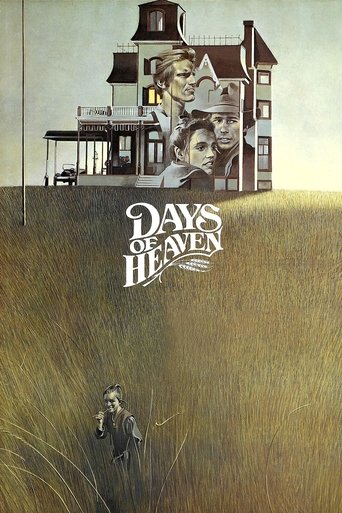
Days of Heaven (1978)
Another film that tells its story through landscape, light, narration and fragmentary images, with feeling carried more by the visuals than by the plot.

See what influenced it
Billy Budd (1962)
Peter Ustinov's adaptation of Melville's story offers a more direct treatment of the source and shows how far Denis's version departs from it.