Drama
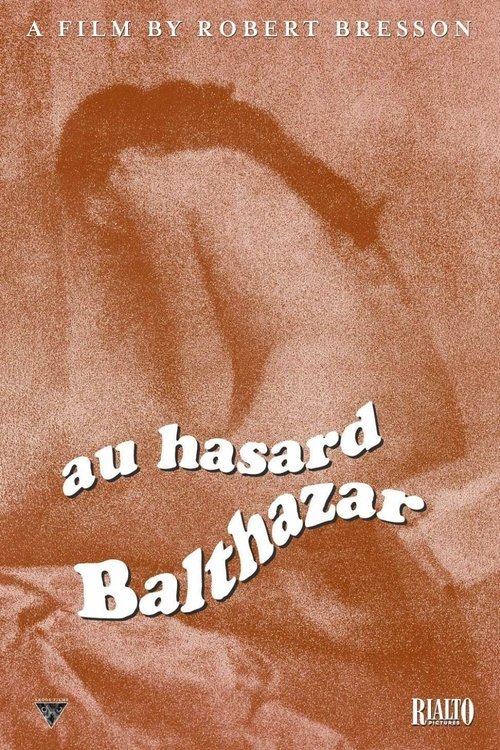
Au Hasard Balthazar
French
1966 · Directed by Robert Bresson · 96 min


Drama
French
1966 · Directed by Robert Bresson · 96 min


Meaning, unpacked
Central idea
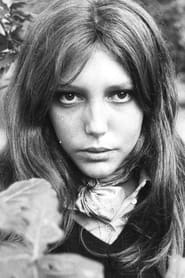
The film can be read as a parable of innocence moving through a world of vanity, greed and casual cruelty. Balthazar's suffering and Marie's run in parallel, asking whether grace, patience or goodness can exist where nobody notices them.
What it means
A donkey is born, baptised by children, and passed from owner to owner. Marie, the girl who loved him as a child, drifts through her own troubles beside him. He ends in the mountains, among sheep. You can read the film as a parable: innocence moving through a world of vanity, greed and casual cruelty. Balthazar takes in the vices of every owner without understanding any of them, and the film asks something hard: what does it mean to be good in a world that offers goodness no reward?
The sins arrive one at a time, each carried by a person: greed, vanity, drunkenness, lust, pride. Nothing grand, just the everyday kind. Marie's life mirrors the donkey's, with similar patterns of use and abuse, though the film never says so. Beneath it all runs a question of who holds whom, through property, money and sexual or physical power. Bresson was a Christian filmmaker, and the donkey's baptism and Christlike patience point to a spiritual reading, but the film never preaches. The meaning stays in what happens.
Why it mattered
Au Hasard Balthazar showed that a film could be almost stripped of conventional drama and still carry tragic and spiritual weight. Bresson called his non-professional performers models and repeated takes until they stopped acting. The result is a flat, almost automatic delivery that gives you room to project your own feeling and keeps your eye on actions and consequences.
Before anyone tells you what to think: what did you make of it?
Log in to rate it and leave commentsIt takes one click with Google or an email link. You come straight back here.
Rate it, keep your notes, and find the next film.
Free, no ads. Your journal, your lists, a Cine Guide that remembers you.
Create your free spaceThe donkey is filmed with the same restraint. There is no voiceover and no contrived reaction shot. Patient framing and close-ups make Balthazar seem to look and react, so he stays mysterious, never cute. Scenes cut off early and episodes jump ahead, leaving you to work out cause and effect. Music is used sparingly, so a slow Schubert movement hurts when it returns. It stood beside the French New Wave in time, but took a different path: spiritual, rigorous and anti-theatrical.
On release, the response was respectful but divided. Admirers were moved, while others found it too austere. Over time, critics came to see it as a high point of Bresson's career, and Godard famously praised it as a film that contained the world.
Its influence is wide. Untrained actors and elliptical storytelling run through the work of the Dardenne brothers, Aki Kaurismäki and Kelly Reichardt, and its animal-centred approach resurfaces in later films such as EO. Paul Schrader's book on transcendental style helped make Bresson a touchstone for spiritual cinema. Today the film's reputation has grown steadily. It is widely seen as Bresson's central work, studied by filmmakers and critics, and often named among the great films of the 1960s.
What happens
Balthazar, forced into smuggling, is shot by customs officers in the mountains at night. He walks on into the morning, lies down among a flock of sheep, and dies quietly. Nobody is there to see it.
The last image
Balthazar lies dying among the sheep in the morning light, in the mountains.
What it says
The ending gives the donkey's long suffering no reward, only a quiet death among gentle animals. Bresson refuses to preach: the people around Balthazar never noticed his goodness, and it is left to you to see it.
Or follow an idea from this film


Continue the director
Under the Sun of Satan (1987)
Maurice Pialat's film is not Bresson's, but within your list the closest spiritual-drama companion for this theme. Seek out Bresson's own Pickpocket or Mouchette to continue with the director.
Follow the idea
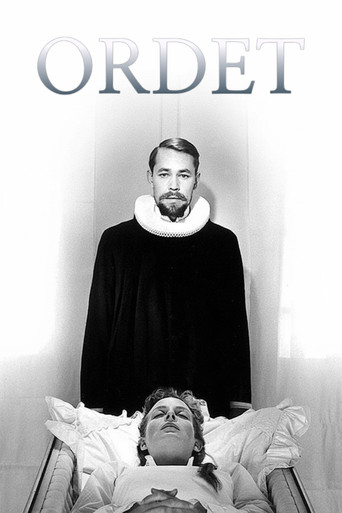
Ordet (1955)
Dreyer's film shares a rigorous, spare approach to faith, suffering and miracle, and makes a natural pairing with Bresson.
Compare another approach
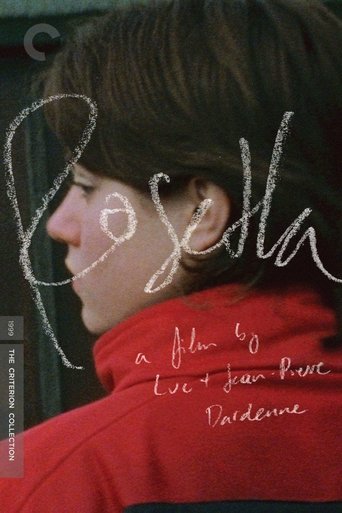
Rosetta (1999)
The Dardenne brothers follow a young person under pressure with similar restraint and physical attention, in a modern setting.
Explore the era or movement
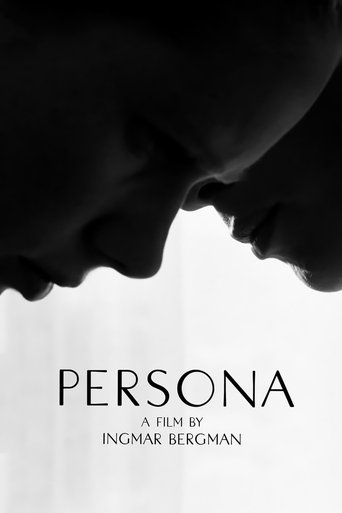
Persona (1966)
Released the same year, Bergman's film shows another path for 1960s art cinema, equally austere but more openly psychological.