Drama · Science Fiction · Mystery
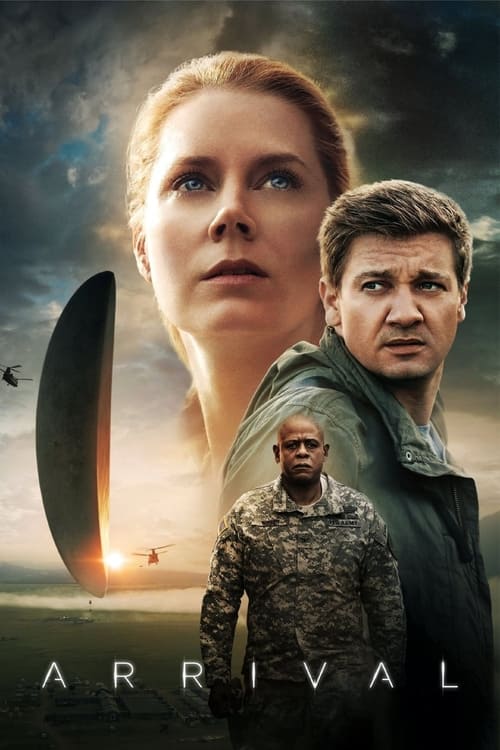
Arrival
American
2016 · Directed by Denis Villeneuve · 116 min


Drama · Science Fiction · Mystery
American
2016 · Directed by Denis Villeneuve · 116 min









Meaning, unpacked
Central idea
The film can be read as an exploration of how language shapes the way we understand the world, and of whether understanding something fully means accepting it, including its pain. Its alien contact story doubles as a story about love, loss and choice.
What it means
On the surface, Arrival is about twelve alien ships appearing and a linguist, Louise Banks, being asked to find out why they came. Underneath, it is a story about love, loss and choice. The contact story is a way in to something much more personal.
The film asks how language shapes the way we understand the world, and whether understanding something fully means accepting it, pain included. Louise learns the heptapods' written language, and it changes how she experiences time. She knows the grief that is coming and goes toward it anyway. Her answer to fate is acceptance, not resistance. The film leaves you with one question: knowing the pain ahead, would you still say yes?
It also looks at how fragile understanding is. The twelve landing sites test whether nations will share what they learn, and fear and secrecy nearly defeat the communication the visitors offer. A single word like weapon or tool can mean war or peace, depending on how it is read. Its heroism is intellectual and emotional, not military: Louise takes off her protective suit and presses her hand to the glass, because understanding depends on risk and openness.
Why it mattered
Arrival showed that a major studio could release a slow, adult, idea-driven alien-contact story and have it succeed with critics and audiences alike. Instead of invasion and battle, the drama comes from translation, patience and doubt. It continues the thoughtful strand of alien-contact cinema that runs from The Day the Earth Stood Still to Close Encounters.
Its craft carries the idea. Bradford Young's soft, diffused light and muted palette make it hushed and otherworldly. The heptapods' ring-shaped written symbols were created specially for the film, so they look truly unlike human script, yet stay elegant and legible. The structure hides its secret in plain sight: the opening montage of Louise and her daughter plays very differently on a second viewing. The climax, a phone call to General Shang, has no fight in it. Language, memory and trust prevent a war.
Before anyone tells you what to think: what did you make of it?
Log in to rate it and leave commentsIt takes one click with Google or an email link. You come straight back here.
Rate it, keep your notes, and find the next film.
Free, no ads. Your journal, your lists, a Cine Guide that remembers you.
Create your free spaceThe film helped prove that studios could back thoughtful, original-feeling science fiction at scale. That paved the way for Villeneuve's Blade Runner 2049 and Dune, and encouraged later emotional, ideas-driven genre films. It also marked the point where Villeneuve became a major genre director.
It brought the debate about linguistic relativity to a mass audience, and teachers often use it while noting that its strong claims are far more extreme than mainstream linguistics. The heptapod script became a shorthand for alien communication, and the film sent new readers to Ted Chiang's novella. Critics widely praised it, though some found the pace slow. It earned eight Oscar nominations, including Best Picture and Best Director, and won for Sound Editing. Its reputation has grown with rewatching, and it is now treated as one of the finest science-fiction films of its decade.
What happens
Louise stops a war by calling General Shang with words from his future. We see that the scenes of Hannah were glimpses ahead, not memories. She tells Ian about their daughter's death, and he leaves.
The last image
Louise, knowing the loss to come, stands with her daughter and chooses to have her anyway.
What it says
The ending says that understanding something fully means accepting it, pain included. Louise doesn't fight fate; she says yes to love despite certain loss. The film ends here to leave you with one question: would you do the same?
Or follow an idea from this film

Continue the director
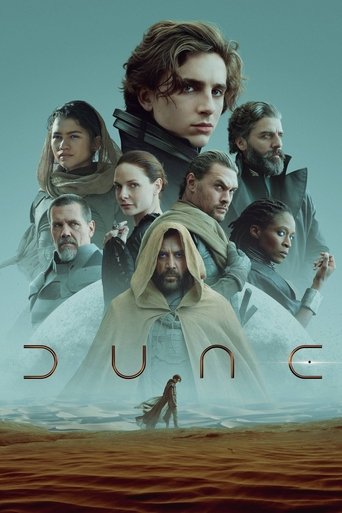
Dune (2021) (2021)
Villeneuve on an epic scale. Its hushed atmosphere and sound-driven world-building grow directly from Arrival's approach.

See what influenced it
Close Encounters of the Third Kind (1977)
Another film in which first contact becomes a problem of communication, with music and signal in place of speech.

Compare another approach
Interstellar (2014)
A cerebral blockbuster that also joins big scientific ideas to a personal story of parent and child, with a very different approach to time.

Follow the idea
La Jetée (1962)
A short, haunting film about memory, time and one image that stays with a person, a very different route to ideas Arrival explores.
Explore the era or movement
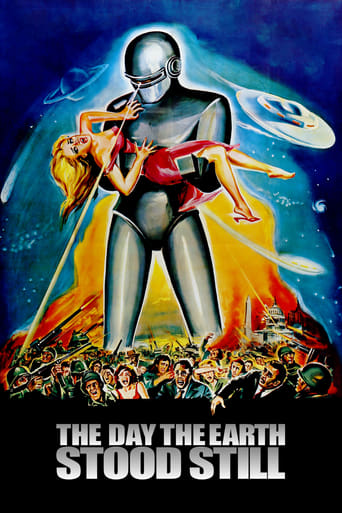
The Day the Earth Stood Still (1951)
A Cold War alien-visitor film that shows what the genre looked like before it turned toward communication and understanding.