Science Fiction · Horror
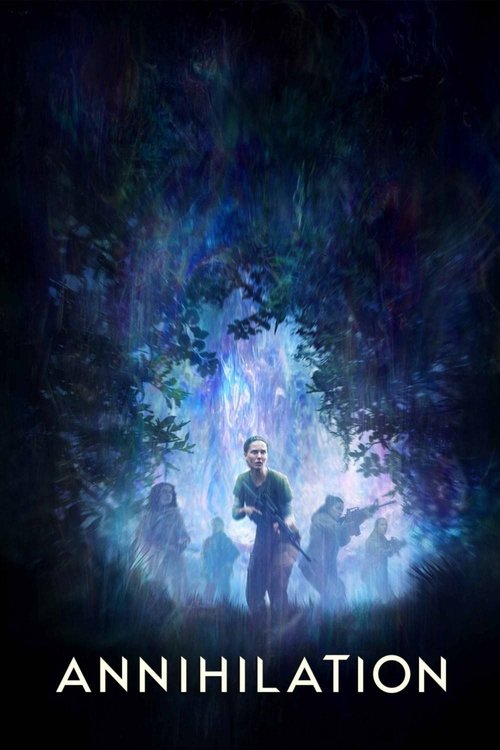
Annihilation
American
2018 · Directed by Alex Garland · 115 min


Science Fiction · Horror
American
2018 · Directed by Alex Garland · 115 min









Meaning, unpacked
Central idea
The film can be read as an exploration of change as a force that is both destructive and creative. Cells divide, landscapes mutate, and people undo themselves, and the question is whether anything stable, such as a self, a marriage or a grief, survives that process.
What it means
Annihilation is about change, a force that destroys and creates at the same time. Cells divide, landscapes mutate, people undo themselves. Lena follows her husband Kane into the zone, but the real question underneath is whether anything stable survives: a self, a marriage, a grief.
The film's answer is uneasy. Self-destruction isn't a flaw in a few unlucky people. It's closer to nature, built into biology and into us. Every member of the team carries a private loss or failure, so the trip is as much an inner journey as a physical one. Science struggles too: these trained observers take samples and make hypotheses, but the zone keeps defeating their categories. And the film keeps asking what makes you the same person over time, and whether a perfect copy is still the original.
Three scenes carry this. The bear screams in a dying woman's voice, planting the idea that the zone absorbs what enters it and reproduces it. Kane's video at the lighthouse turns his mystery from a puzzle with a villain into a tragedy about choice and despair. In the mirror dance, the humanoid entity copies Lena's movements, then surpasses her, until she destroys it with a phosphorus grenade.
Why it mattered
Annihilation was a rare big-studio film built around mystery, a female ensemble and a refusal to explain. It belongs to the 2010s wave of cerebral, adult science fiction and horror. After the acclaimed Ex Machina, Alex Garland adapted Jeff VanderMeer's novel loosely, keeping its mood and ideas but shaping a more personal story around Lena's marriage.
Before anyone tells you what to think: what did you make of it?
Log in to rate it and leave commentsIt takes one click with Google or an email link. You come straight back here.
Rate it, keep your notes, and find the next film.
Free, no ads. Your journal, your lists, a Cine Guide that remembers you.
Create your free spaceThe look and sound were part of the argument. Lush, flower-covered ruins sit against cold military interiors, so the zone is gorgeous and its threat harder to read. The score by Geoff Barrow and Ben Salisbury slides from folk-like guitar into alien electronics. Lena's debrief with an interrogator keeps you aware that her account is incomplete. It also echoes Stalker's forbidden territory, now rendered in rich colour.
Reviews were largely strong, praising the visuals, the sound and the ambition, though a minority found it cold or confusing. It opened modestly in North America with a limited theatrical run. Paramount released it there and in China, while Netflix took most other countries, where it gained a wider and enthusiastic following.
Its reputation has kept growing. It's now often called one of the best science-fiction films of the 2010s, valued for not over-explaining. It helped confirm an appetite for daring genre films from major studios, and its mix of natural beauty and body horror shaped later imagery. Many read the zone as a metaphor for cancer, grief, trauma or depression, and the film sent many people to VanderMeer's Southern Reach novels.
The film never tells you whether Lena survives as herself. The ending doesn't prove she was replaced by a copy. It leaves the question open on purpose. Maybe that's the point: everything changes, and what's left may not be the thing you started with.
What happens
Lena destroys the entity that copied her and escapes as the Shimmer collapses. Afterward she is reunited with the man who returned as Kane. He admits he may not be the real one, and when they embrace, both their eyes briefly shimmer.
The last image
Lena and the returned Kane embrace, and for a moment both their eyes shimmer with the zone's light.
Three readings
What it says
Change in the zone isn't good or evil, just unstoppable. By refusing to say whether Lena is still herself, the film asks whether a self can survive change at all, and whether a perfect copy matters.
Or follow an idea from this film
Continue the director
Ex Machina (2014)
Garland's debut shares the interest in science, identity and what it means to be a person, in a smaller, more contained form.
Coming soon

See what influenced it
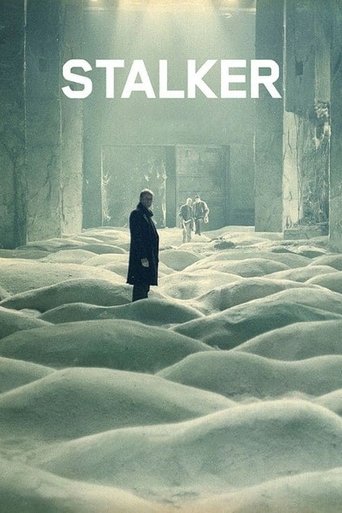
Stalker (1979)
The model for a mysterious Zone and a small party entering it. Slower and more philosophical, it shows how much Garland borrowed in spirit.
See what influenced it
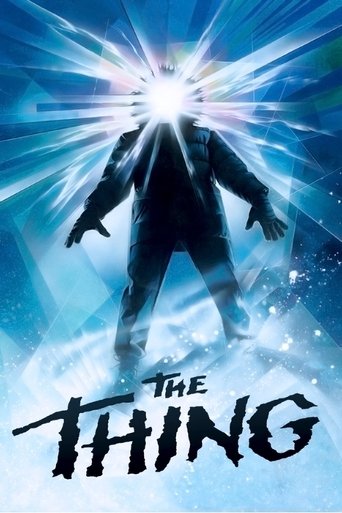
The Thing (1982)
A classic of biological horror in which an isolated team cannot trust what it sees, and a useful comparison for the film's body-horror side.

Compare another approach
Arrival (2016)
Another thoughtful 2010s science-fiction film led by a woman scientist, answering contact with the unknown through language and emotion rather than force.
Follow the idea
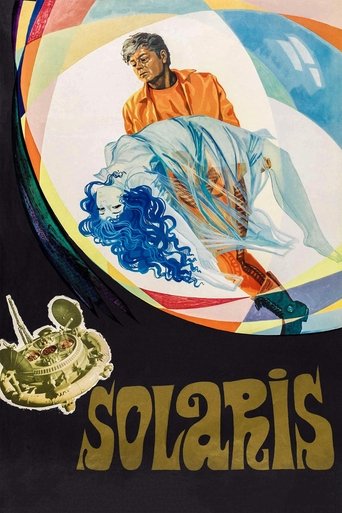
Solaris (1972)
Tarkovsky's meditation on scientists confronted by an alien presence on a distant station, and an enduring model for philosophical science fiction.