Drama · Romance
A Woman Under the Influence
American
1974 · Directed by John Cassavetes · 155 min


Drama · Romance
American
1974 · Directed by John Cassavetes · 155 min






Meaning, unpacked
Central idea
The film can be read as a study of how love, family and social expectation collide: it asks who decides what counts as normal behavior in a marriage, and what it costs a person to be measured against that standard.
What it means
Mabel loves her husband and her children, and Nick loves her back. Under the strain of family and expectation, Mabel unravels, Nick has her sent away, and she comes home to a party. But the film is really about who gets to decide what counts as normal. Nearly everyone around Mabel has a view of how she should behave, and it keeps asking whether the problem lies in her or in the narrow roles she is expected to fill. It never names an illness. That is deliberate.
The same question runs through the marriage. Nick and Mabel love each other and struggle to understand each other, and the film won't separate affection from damage. Her identity rests on being a wife and mother, his on work and being in control. Both are trapped in expectations they cannot meet. Dinners, parties and visits turn the house into a stage, and the homecoming party shows the problem is shared.
Why it mattered
In 1974, American films were growing glossier. This one offered long, tense, uncomfortable scenes that feel lived rather than staged. Instead of neat plotting, it builds from big blocks of time in the house, and emotion takes the place of plot. It showed that a character study driven by performance could stand beside the genre pictures of the New Hollywood.
It also showed what a filmmaker could do outside the studios. Cassavetes wrote the script, rehearsed the cast at length, and used a handheld camera that stays close to faces and bodies, searching for the moment instead of arranging it. Voices overlap, people shout, and music is sparing, so the film rarely tells you how to feel. When studios and distributors showed little interest, he took it to theaters himself, city by city.
Before anyone tells you what to think: what did you make of it?
Log in to rate it and leave commentsIt takes one click with Google or an email link. You come straight back here.
Rate it, keep your notes, and find the next film.
Free, no ads. Your journal, your lists, a Cine Guide that remembers you.
Create your free spaceThat hands-on distribution became a landmark of independent self-distribution, and the film became one of his most successful commercially. It earned two Academy Award nominations, for Gena Rowlands and for Cassavetes as director, and won neither. Some viewers found its length and intensity hard going. Many others championed its emotional honesty.
Its influence is easy to trace. Directors such as Mike Leigh and Lars von Trier, and many American independents, work in the space it opened between scripted drama and lived behavior. Today it is widely seen as Cassavetes' finest film and Rowlands' greatest performance. Modern readings look harder at its gender politics and its treatment of mental illness, but its refusal of easy answers is now what people value most.
What happens
Nick finally sends the guests home and tells Mabel to be herself. Together they put the children to bed and tidy the house. The calm is real but fragile, and it fixes nothing that caused the breakdown.
The last image
The couple finish tidying the quiet house after the children are in bed, a fragile peace with nothing settled.
What it says
The ending refuses a cure or a verdict. Nick's "be yourself" admits that everyone's demand to act normal was the strain. Mabel isn't fixed, because the problem was shared, so the film leaves you in the room, still deciding.
Or follow an idea from this film
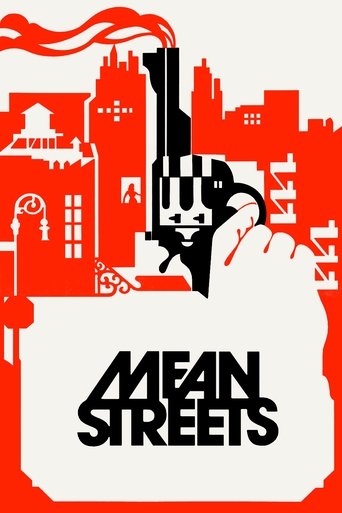

Explore the era or movement
Mean Streets (1973)
Scorsese's breakthrough shows how Cassavetes' loose, performance-driven realism fed into New Hollywood a year earlier, with a very different, more kinetic style.
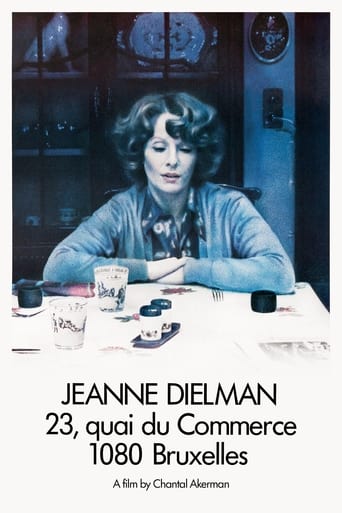
Follow the idea
Jeanne Dielman, 23, quai du Commerce, 1080 Bruxelles (1975)
Akerman's film also treats domestic life and a woman's roles as the subject, though through strict stillness rather than emotional turbulence.
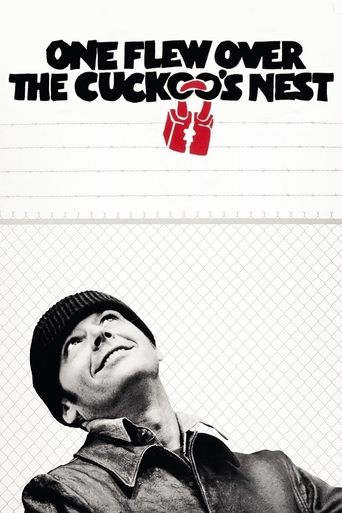
Compare another approach
One Flew Over the Cuckoo's Nest (1975)
Another mid-1970s American film about institutions, normality and who decides it, told in a much more conventional, crowd-pleasing form.

See its influence
Secrets & Lies (1996)
Mike Leigh's family drama carries on the tradition of actor-centered, emotionally exposed storytelling in a British setting.
Jump forward
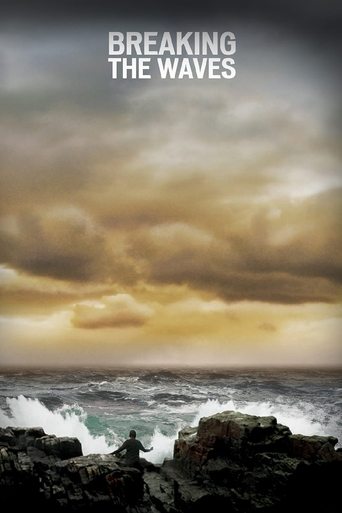
Breaking the Waves (1996)
Lars von Trier's handheld melodrama shows how this kind of raw performance and judgment of a woman's behavior was reinvented two decades later.