Documentary
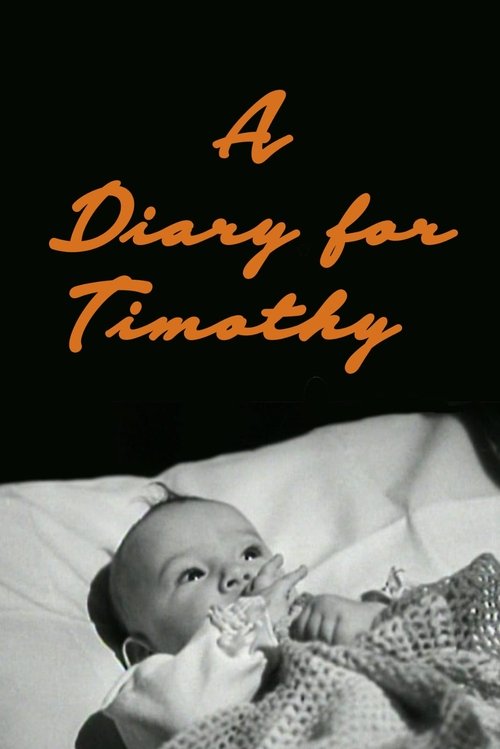
A Diary for Timothy
British
1945 · Directed by Humphrey Jennings · 39 min


Documentary
British
1945 · Directed by Humphrey Jennings · 39 min
Meaning, unpacked
Central idea
The film can be read as a question rather than a report: after years of sacrifice, will peace be used better than it was last time? Timothy, born in the war's final stretch, stands for the future that must choose.
What it means
A Diary for Timothy is less a report than a question. After years of sacrifice, will the peace be used better than it was last time? A baby named Timothy is born in the final stretch of the war, and a voice speaks to him throughout. That voice is E. M. Forster's commentary, spoken by Michael Redgrave: tender and sceptical at once, because it addresses a child who cannot yet understand. The war becomes a world being handed to an infant, and the film keeps asking what he will make of it.
Around that voice, a Welsh miner, a wounded airman, a train driver and a pianist live through one winter. Work is shown as national purpose and as the fabric of daily life. The miner's accident and the airman's slow recovery put human cost inside a film about public hope, and the film lets neither hope nor grief win. Music, poetry and drama appear as things worth protecting. The ending turns from reporting to a direct question while the baby sleeps, and leaves the responsibility with you.
Why it mattered
Humphrey Jennings came to film from painting and poetry, and he treated documentary as an art of association. He cuts between work, leisure, danger and music, so unrelated scenes comment on each other. The effect is closer to poetry than to argument. Sound often leads the image instead of illustrating it: Addinsell's score, Myra Hess's piano and natural sound are all expressive material. Some scenes were observed and some arranged, but all share the same gentle realism.
Before anyone tells you what to think: what did you make of it?
Log in to rate it and leave commentsIt takes one click with Google or an email link. You come straight back here.
Rate it, keep your notes, and find the next film.
Free, no ads. Your journal, your lists, a Cine Guide that remembers you.
Create your free spaceIt also stood apart from ordinary wartime propaganda. It was made in the state film system, by the Crown Film Unit, whose work was moving from rallying the country to wondering what peace might mean. The film carries the doubts of 1944 and 1945 openly, and it asks whether peace will be handled better than before. British audiences, eager for victory yet anxious about what came next, recognised it as a serious work, not a routine information film.
The film helped establish a tradition of lyrical, reflective British nonfiction, where public history is told through ordinary lives. Later filmmakers inherited its mix of intimate voice, music and montage. Forster's worried question about what kind of world Timothy will inherit is still quoted. Its images of the miner, the airman, the driver and Myra Hess at a wartime concert are often used to show Britain in the last winter of the war, gentler and more doubtful than any slogan.
Its reputation has only grown. It is now seen as one of the finest British documentaries and a high point of Jennings's career, as critics came to value its poetic, humane approach over the immediate usefulness of wartime films. Lindsay Anderson's praise helped make Jennings an emblem of a humane, understated idea of Britishness. The film is shown in retrospectives and taught in film and history courses.
What happens
The narration stops reporting and asks Timothy a direct question. The war is ending, but will he inherit a peace worth having, or will greed and forgetfulness bring the same troubles back? The film gives no answer.
The last image
The baby Timothy lies asleep, and the question put to him hangs unanswered.
Two readings
What it says
Timothy stands for the future, and the film treats peace as a choice, not a prize. Ending on a question instead of a victory leaves the responsibility with you, which is why the close feels moral, not triumphant.
Or follow an idea from this film

Continue the director
Listen to Britain (1942)
Jennings's earlier masterpiece is shorter and wordless, and shows his montage of music and daily life in purer form.
Follow the idea
Night Mail (1935)
A prewar British documentary that finds poetry in work, with verse, music and rhythm.
Explore the era or movement
The Best Years of Our Lives (1946)
Hollywood's drama of returning servicemen deals with the postwar questions that Jennings's film leaves open.
See its influence
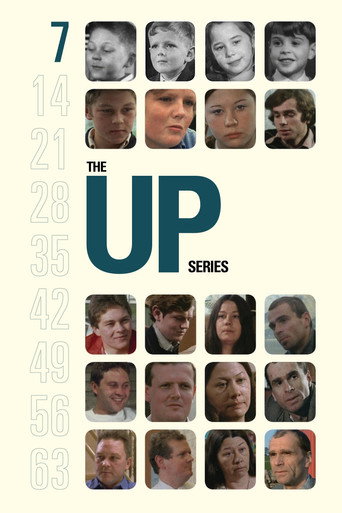
Seven Up! (1964)
A later British documentary that follows children into adulthood and treats individual lives as a record of society.
Compare another approach
Night and Fog (1956)
Another essay film that mixes narration, image and memory, with a very different and darker view of the same war.