

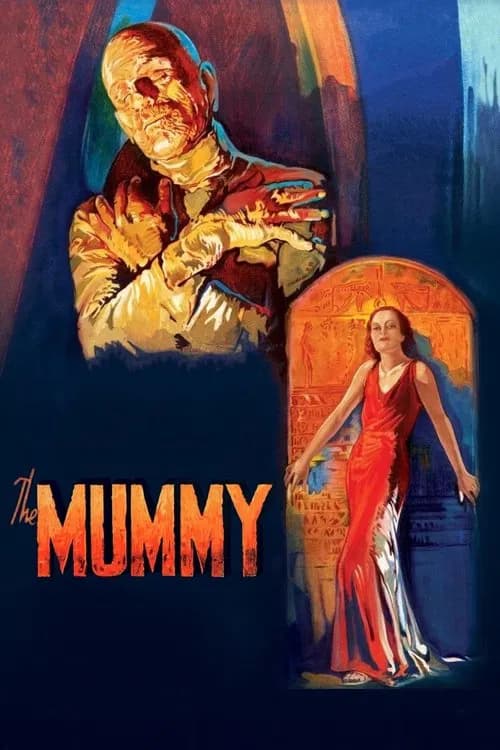
Horror
The Mummy
Avg rating 7.5 / My rating TBC
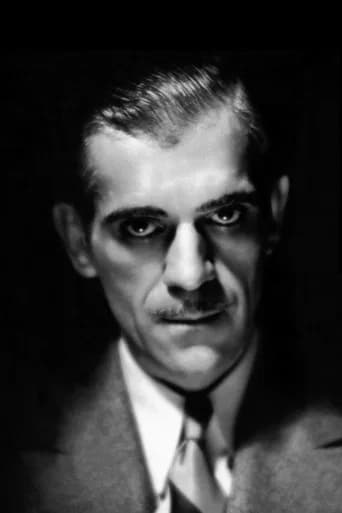
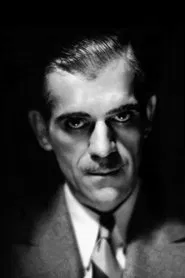
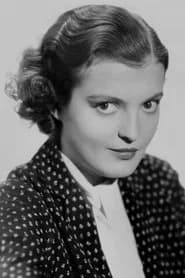
1932 · Directed by Karl Freund · With Boris Karloff, Zita Johann, David Manners
- Universal Horror
- Horror
- Classical Hollywood
- Early Sound
An archaeological expedition in Egypt opens a sealed casket and, through one careless act, sets something in motion that was meant to stay buried. Ten years on, the consequences reach a circle of Englishmen in Cairo. A slow, atmospheric gothic chiller from the Universal horror cycle.
Film info
- Runtime
- 1h 13m · 73 min
- Format
- Black and white, in the standard 1.37:1 frame of the early sound era. Violence is mostly implied, with little onscreen gore.
- IMDb
- 6.9 / 10 (32,775 votes)
- Rotten Tomatoes
- 90% (critics)
- TMDB
- 6.7 / 10 (audience, 729 votes)
- Trailer
- ▶ Watch the trailer
Before watching
Spoiler-free · about 2 minutes
Why watch this?
A cornerstone of the Universal horror cycle
Released the year after Dracula and Frankenstein, it is the third pillar of Universal's founding run of monster films and the source of the studio's Egyptian-curse horror, later copied in countless mummy films.
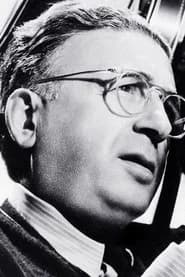
Karl Freund directs, after shooting Metropolis and Dracula
Freund, the cinematographer of The Last Laugh, Metropolis and Dracula, brings German silent-era lighting and camera craft to Hollywood, so the film's mood comes from images more than from action.
Karloff follows Frankenstein with a second iconic role
Boris Karloff, newly famous, appears in makeup by Jack Pierce, whose studio monster designs defined the look of 1930s horror. The role asks for something very different from his earlier one.
Why it matters in cinema history
A defining early-sound horror film and the origin of the cinematic Egyptian curse, it shows how Universal turned German Expressionist technique into a Hollywood genre.
Watch with intention
Your lens
Watch it as a horror film shot by a master cinematographer: fear built from faces, eyes, light and patience rather than action.
Three things to notice
- How long the camera holds close-ups of faces, especially eyes, and how much the film asks you to read from a look alone.
- How little music there is: the score appears at the start, and much of the film plays in near silence, so small sounds matter.
- The lighting and set design in the Egyptian and museum interiors, where deep shadows and beams of light carve out faces and shapes.
One question to carry with you
What does the film choose to show you, and what does it keep out of frame, and why might that be scarier?
- Industry
- Universal had struck gold with Dracula and Frankenstein in 1931. This film extends that success, using the same studio craftsmen, a star Karloff and a ready audience for gothic fear.
- Egyptomania
- The opening of Tutankhamun's tomb in 1922 fuelled a decade of press fascination with Egyptian curses and archaeology, which the story draws on directly.
- Pre-Code era
- Made before strict Hollywood censorship in 1934, it could treat desire, death and the occult with more openness than later studio horror.
- Director's moment
- Karl Freund moved from camera to direction. His German training under silent-era Expressionism shapes the lighting, close-ups and controlled, deliberate camera.
Where it came from
Film
Dracula (1931)
Universal's earlier hit, photographed by Freund, supplies the template of slow, atmospheric gothic horror with a sinister mystery at its centre.
Film
Frankenstein (1931)On Cinespective
Karloff's breakthrough and Jack Pierce's makeup established the star and the craft behind Universal's monsters, setting audience expectations for this film.
Movement
German Expressionism
Freund's shadowy, stylised lighting and composed frames come directly from his work on German silent films such as The Last Laugh and Metropolis.
This film
The Mummy (1932)
New at the timeA Hollywood monster film built on stillness, framing and the held gaze rather than action, carrying German silent-era camera craft into the sound-era horror cycle.
- Depression-era escapism
- By 1932 American unemployment was severe and cinema attendance had fallen. Universal, a smaller studio in financial difficulty, found a steady audience for horror, which was relatively cheap to make and offered a dark, fantastical diversion.
- Egyptomania
- Howard Carter's discovery of Tutankhamun's tomb in 1922 had fuelled a public craze for Egypt. Newspaper stories of a "curse" around the excavation gave the film a ready popular backdrop, as did the era's Western archaeological expeditions.
- Colonial outlook
- The story reflects the period's Western, largely British-led view of Egypt, which had only been nominally independent since 1922 and was still under heavy British influence. Egyptians are seen mostly through a European, exoticising lens.
- The filmmaker's situation
- Karl Freund was a German émigré who had made his name as a cinematographer in Weimar-era films. This was his first job as director in Hollywood. Many German-trained artists worked in Hollywood as the 1930s began, and several would soon flee Nazi Germany.
- Pace
- Slow and deliberate for a modern viewer, at 73 minutes. Dread builds through conversation and atmosphere, not chases or shocks.
- Style
- Gothic horror in the Expressionist tradition: strong shadows, composed shots, long holds on faces, and sparing camera movement.
- Performance
- Early-sound acting leans theatrical and formal, with clipped speech and big emotion. Karloff's work is the most controlled in the cast.
- Sound
- Early sound film with very little score, so silence plays an active role. Dialogue is crisp and somewhat stagey.
- Format
- Black and white, in the standard 1.37:1 frame of the early sound era. Violence is mostly implied, with little onscreen gore.
12+
Suggested age
Teens
Official ratings range from PG to 15 (GB) and 12 (DE), with no US rating; 12 suits the eerie mood and old-fashioned pacing better than 8.
Official ratings
- USNR
- UKPG / 15
- Germany12
Good for
Classic monster-movie atmosphere, Boris Karloff's quietly menacing performance, striking Egyptian-themed sets and a short runtime. A gentle gateway to 1930s horror for children who like spooky stories.
May unsettle
- Scary imagery: A gaunt, bandaged figure and intense hypnotic stares are used for eerie effect. There is little gore, but the look of the film is creepy.
- Peril: Supernatural menace hangs over several characters, and some scenes build tension around people being watched, controlled or threatened.
- Dated attitudes: Egypt and Egyptians are portrayed through a colonial-era Western lens, with stereotyped characters and non-Egyptian actors in Egyptian roles.
- Pace: Slow, talky and black-and-white, with theatrical acting that younger viewers may find stiff or hard to stay with.
Explain first
- It is a 1932 black-and-white film, so the effects and acting are old-fashioned. The fear comes from mood rather than shocks or gore.
- Mummies are preserved ancient Egyptian bodies. The story is pure fantasy and does not reflect real archaeology or Egyptian beliefs.
Talk about it after
>Why might a film made without modern effects still feel creepy, and what tricks does it use instead, such as lighting, sound or a character's gaze?
Cinespective's own guidance, a draft: check it against the official ratings and your own judgement. Second opinions: Common Sense Media, IMDb (see its Parents Guide). Ratings from TMDB.